
INTRODUCTION
The concept of identity can be a highly debated topic as one’s identity may be defined by numerous factors including their beliefs, values, experiences, relationships, and culture. However, this study aims to highlight another key factor that may impact one’s identity, the role and importance of language. More specifically, this study focuses on the role of one’s heritage language (HL) in their identity and sense of self.
While the nature of one’s identity can be highly contested, Leeman (2015) discusses the contemporary perspective of identity and how one’s sense of self and relationship with the world around them is continuously shifting and shaped by contexts, ideologies, relations, and policies. Martinez-Brawley and Zorita (2006) also discuss how identity expands beyond the individual level, encompassing a sense of connection and belonging at a larger cultural level. In fact, in terms of language, their research argues that “…. ‘mother tongue’ is probably one the earliest cultural systems linked to identity development and one of the earliest and most lasting assets of an individual” (Martinez-Brawley & Zorita, 2006, p. 88).
Under the umbrella of identity, Leeman (2015) argues that language and language learning is a “fruitful arena” to study one’s sense of self or identity; however, the concept has only seen significant research within recent years. Guardado (2008) also argues that there is a critical interdependence between language and cultural identity. Guardado’s (2008) research on language and cultural identity highlights how increased awareness of one’s heritage culture promoted the development and maintenance of one’s heritage language. Similarly, Alshihry (2024) found a positive relationship in which “youth of immigrants who hear their heritage language spoken often at home benefit not just in linguistic but also in cultural and ethnic identity development” (Alshihry, 2024, p. 500). On the other hand, Guglani’s (2016) research found a generational difference in the perception of the role of language in identity. Guglani (2016) found that “when discussing the ‘detachability’ of language from culture…older parents and younger parents’ opinions differed markedly” (Guglani, 2016, p. 353). For older parents, language and culture are inseparable elements; that is, in order to preserve the native culture, one must also preserve the native language", however, Guglani (2016) found that among their children “…many say that they most identify with or are most proud of being Hispanic, rather than being Spanish speaking” (Guglani, 2016, p. 353).
With the important role of language in one’s identity, Guardado (2008) emphasizes the need for programs to promote cultural and linguistic awareness among heritage speakers as participants viewed the Spanish language as a “window” into their culture. Additionally, Guardado (2008) found that “…some parents also expressed their conviction that a strong cultural identity would allow their children to want to maintain Spanish, highlighting the dynamic interrelationship that exists between cultural identity and language and revealing an iterative relationship between the two” (Guardado, 2008, p. 177).
In recent years, there has been a significant increase in scholarship and research regarding heritage language education. Leeman (2015) discusses how research regarding the relationship between heritage language and identity has increased in the past decade, allowing for a greater understanding of the role of language and identity in educational and extracurricular contexts. Heritage language education has grown dramatically in recent years, especially among universities in the United States. Heritage language learners may take an educational course in their heritage language for numerous reasons; Carreira and Kagan (2011) found that Spanish speakers sought to study their heritage language for future career prospects, communication with friends and family, fulfilling language requirements, and learning about their heritage culture.
Jensen and Llosa (2007), in their research on heritage speakers of Spanish, found that when asked if it was important to maintain their heritage language (HL) identity, "…the vast majority of the students (94%) stated that it was. 52% of the students felt that it was important to maintain their HL identity because it reflected their heritage and “who they are.” 28% wanted to maintain their HL identity so that they could communicate with their family and community members, and 16% wanted to pass the HL on to their children. Only 6% reported that it was important to maintain their HL for their future career or job.
Although there has been an increase in the population taking heritage language courses, many universities do not properly address the desires of these students. They have a variety of motives and reasons for taking the course (Jensen & Llosa, 2007), such as strengthening one’s identity and connection with their heritage culture. Valdés (2005) found that when heritage students were placed into the same language courses as non-heritage learners, they had difficulty with the approaches to teaching the language, the students struggled with the approaches to teaching grammar rules and explanations of the language since they already spoke the language. In the research highlighted above, one’s language may play a significant role in shaping their sense of self. Heritage speakers may seek out educational courses, organizations, or communities that promote the use of their heritage language in hopes of strengthening cultural connections and their sense of self. Although scholars have emphasized these connections between identity and heritage language, given the fact that said scholarship is relatively recent, significant gaps remain. Such gaps include better understanding the impacts of language ideologies, education systems, and intersectionality of various factors on heritage speakers’ identity. This study aims to understand the relationship between the Spanish language and the identity of heritage speakers, as well as how it can effectively be promoted among university students.
OVERVIEW OF LITERATURE
In the context of this study, a “heritage speaker” refers to a person who grew up speaking and learning the non-dominant language, in this case a non-English language, in informal environments, such as in their home with their family. However, English is heavily used in other environments, such as in educational environments. This study will focus heavily on heritage speakers in the context of language learning; therefore, they may also be referred to as heritage students or heritage language learners. Valdés (2005) defines a heritage language student as “…a student of language who is raised in a home where a non-English language is spoken. The student may speak or merely understand the heritage language and be, to some degree, bilingual in English and the heritage language” (Valdés, 2005, p. 412). Oftentimes when discussing heritage speakers, educators are referring to a person who learned a language in an informal setting, such as their home environment with family members. Non-heritage speakers, or L2 learners, are often people who learned a language in a formal setting, such as learning the language through academic courses. This informal exposure to the heritage language often leads to differences in acquisition, especially lexical, morphological, and syntactic differences, resulting in asymmetric bilingualism (Polinsky, 2018). These differences require educators to differentiate instruction for heritage learners as compared to traditional L2 learners. Montrul (2016) argues that heritage grammars, while divergent from monolingual L1 speakers and L2 adult speakers, are systematic and not deficient. She also urges educators to incorporate targeted grammatical instruction to meet the needs of heritage learners in a language classroom.
Turning now to the notion of ‘identity’, we will define identity as how speakers conceive of themselves and others. More specifically for this study, this can relate to how an individual conceives themselves with respect to their language(s), and how those languages symbolize their inclusion of a group of speakers of those languages. Studies in the field of language and identity have explored the connections between cultural and linguistic identity, spanning across a multitude of languages, age groups, and levels of education. These scholars have worked to shed light on both individual and overall collective perception of language and the role it plays in one’s sense of identity. Within the Ethnolinguistic Identity Theory (Giles & Johnson, 1987), for example, language is used as a marker of social identity, especially when speakers identify strongly with the ethnic group(s) associated with that language. In the current study, we will return to this notion, especially when participants are asked to describe how they identify and how and when they use each language that they speak.
A multitude of factors can contribute to one’s sense of identity and whether they view language as having an important connection to identity. In fact, Guglani (2016) analyzed the perception of language in regard to cultural identity and found that older generations tended to view language as an essential or linked component to one’s cultural identity; however, younger generations did not prioritize language as an essential factor in cultural identity. Additionally, Tararova (2017) explored the connection between heritage language and how it fits as a part of one’s identity, although Tararova (2017) focused on the importance and impact of language maintenance of Veneto, an indigenous language, among heritage speakers and found a positive correlation in participants’ sense of identity and their use of Veneto. Similarly, Martinez-Brawley and Zorita (2006) highlight how language connects with identity, as well as how language promotion can empower heritage speakers. The research showed that bilinguaphobia negatively impacted one’s sense of self, and participants felt empowered in their identity when their native language (like Spanish) was used. Additionally, Showstack (2018) explores the impact of language ideologies and how the role of community, environments, cultural practices, and education help to shape one’s sense of identity. She found that Latin@ identity is multi-faceted, with Spanish use and level playing a crucial but not uniform role for all participants. She argues that Spanish classes for heritage or bilingual students need to be inclusive, with a focus on critical reflection on language and identity, not just on language proficiency itself.
Beyond the broader topic of the relationship between language and identity, there are studies that focus specifically on heritage language education and identity. Leeman (2015) explored the relationship between heritage language education and students’ sense of self or identity. Additionally, while highlighting the recent emergence of heritage language research, Leeman (2015) makes a point to discuss the term “heritage language learner” and how its definition varies across scholarship depending on whether a study chooses to focus more on societal aspects or on one’s linguistic ability. It is important to note that there remains a large discourse regarding a universal definition of the term, however, in terms of this study, Leeman (2015) discusses that researchers who are focused on the educational aspect of heritage language learning, tend to define a heritage language learner as someone who shares familial or ancestral connections to said language, even if they do not speak the language or have limited proficiency. This supports the overall approach this study takes to define heritage language learners since this study views a heritage language learner as someone who identifies with their ancestral or familial cultural ties and not with their overall ability to speak Spanish. Leeman (2015) also found that in recent years there had been an expansion of research in second language acquisition and heritage language education. Leeman (2015) noted that as these two fields have become increasingly interconnected, researchers have challenged previous assumptions that all heritage speakers use their heritage language to connect with or reclaim their cultural identity. Although previous researchers have highlighted the relationship between language and identity, Leeman (2015) highlighted an important aspect when approaching heritage language education, which was the importance of moving away from assumptions that generalize the motivations behind a heritage learner’s reason for learning their heritage language. Furthermore, Leeman (2015) highlighted how the identity of a heritage speaker is diverse and complex, thus there is a need to mend the gap in the current volume of research and further research on heritage speaker identities and their connection with different communities.
Jensen and Llosa (2007) also studied heritage language education on a collegiate level. Although the study did not focus on Spanish heritage speakers, their research provides valuable insight into language and cultural identity. In their study, Jensen and Llosa (2007) studied heritage language learners of Korean, Russian, Thai, and Vietnamese. Although Jensen and Llosa (2007) primarily focused on heritage language classes and programs at UCLA, their research highlighted how many students were motivated to take the heritage language courses in order to strengthen and maintain their cultural identity. While not focused on Spanish heritage language learners, the study demonstrates how heritage language classes and programs can serve as an important resource for heritage learners to connect with their heritage cultural identity. Showstack and Guzman (2020) also approached the relationship between language, identity, and education through studying language maintenance and ideologies. This study in particular, highlights the issue of monolinguistic education systems and how the discouraged use of Spanish may impact heritage speakers, by hindering their maintenance of Spanish and limiting intergenerational transmission. Heritage speakers in the study spoke of their experiences of being scolded by teachers for speaking Spanish with their peers and how the language policy created a hostile environment for Spanish speakers. Additionally, Showstack and Guzman (2020) explored how an English-only policy also impacted students’ use of Spanish outside of school, such as their use of Spanish in their homes. For one participant, they found that academic environments that support the use of Spanish, such as dual language schools, were important in preserving their culture as it allowed for them to speak more Spanish since they primarily spoke English in their daily life.
Overall, researchers have highlighted the interconnected relationship between language and identity across several different languages and communities. Additionally, researchers emphasized the growing importance of heritage language education for heritage speakers, which would ultimately strengthen connections to cultural identity among heritage language learners who view language as an important aspect of identity.
Research Questions
The purpose of this study is to further contribute to the research regarding heritage language learning and the impact it can have on one’s overall identity and cultural values. To gather the essential data for said research, this study will utilize participants (both faculty and student participants) from from a university in North Carolina. This research will also explore the overall impact of educational environment on heritage speaker identity as well. The educational environment aspect of this study aims to provide insight on how the university’s campus, classes, and organizations impact heritage language maintenance and cultural connection in hopes to further promote heritage languages and cultures in the educational system. To that end, our research questions are:
-
What is the linguistic and cultural profile of Hispanic students at this university?
-
What impact do Spanish classes or organizations, such as an on-campus Hispanic cultural center, have on Hispanic students’ identity? How can the University further promote heritage language maintenance on campus?
-
What can this research be used for? How can this research be beneficial for other college campuses or schools?
METHODOLOGY
To address the three research questions of this study, an anonymous survey was conducted, gathering data from students at the university who identified as Hispanic or Latino, as well as faculty and staff members who were involved in Spanish classes or on-campus heritage organizations. All students who participated in the survey were given the same survey questions, as well each faculty and staff member who received a separate, but identical set of questions pertaining to their role with Hispanic students at the university.
Following completion of the survey, all participants were given the opportunity to participate in an optional interview. These were semi-structured interviews to allow for an in-depth and open discussion regarding the participants’ experiences with their heritage language, culture, or experience at the university. Topics included, but were not limited to, conversations about on-campus organizations, connection to heritage culture(s), self-identification, language use in different domains and over time, trends in language use, and one’s sense of belonging on-campus.
Participants
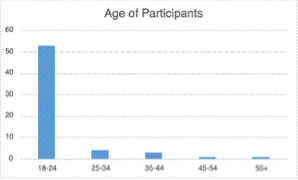
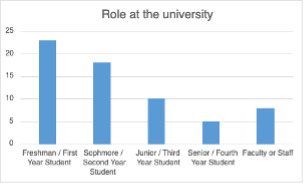
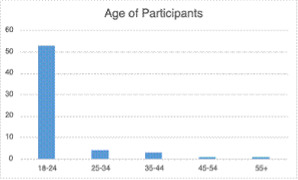
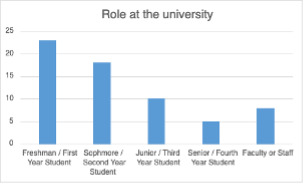
All participants in the study were at least 18 years old, identified as Hispanic or Latino, or were faculty and staff at an R2 public university in the southeastern US. Participants were recruited through flyers and in-class presentations, as well as through email and follow-up messages. The outlined maximum participant pool for the study was 100 participants, with a final collected amount of 64 participants (see Appendix A). Since this study was conducted within a university, aiming to understand Hispanic college students, most participants fell within the 18-to-24-year age range (see Figure 1) and were college students (see Figure 2). Of the total participants, 53 participants (85% of participants) were between the ages of 18-24, 4 participants were in the age range of 25-34 (6%). 3 participants were between the ages of 35-44 (5%), the age range of 45-54 had 1 participant (2%), and 55+ had 1 participant as well (2%).
Procedure
Participants for this study were found through flyers posted around campus and word of mouth. Also, researchers visited the Spanish for bilingual speakers classes to recruit participants. Any student who identified as Hispanic or any faculty that worked with Hispanic students were able to complete the survey about their experiences. The survey was online, able to be accessed through a website link or QR code from the flyer. The survey had questions for both faculty and students; however, there were specific questions only for students and other questions only for faculty. The survey consisted of 3 general questions for both faculty and students, 7 questions specifically for faculty, and 16 questions for students (see Appendix B). Participants were also given the option to consent to a voluntary, follow-up interview. These interviews had no time limit but ranged on average from 5 to 15 minutes. Interviews with student participants consisted of 6 open-ended questions to serve as a guide for the conversation, as well as 7 open-ended questions for faculty and staff (see Appendix C).
On-Campus Organizations
Participants in this study were asked their opinions on different Hispanic organizations within the university’s campus. For clarification, the on-campus Hispanic cultural center offers
Hispanic students a space to connect and resources to support their success at the university. Furthermore, the precollege mentor program aims for Hispanic students to uplift and promote each other in their academic success. Undergraduates are paired with high school juniors and seniors to assist them with preparing for college (SAT/ACT prep, financial aid assistance, college applications, etc.)
RESULTS
Linguistic and Cultural Profile of Hispanic Students
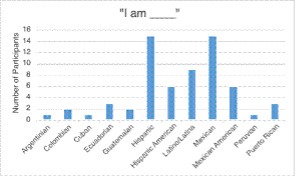
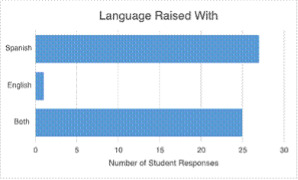
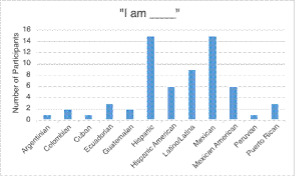
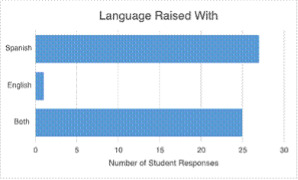
In order to gain insight into the overall linguistic and cultural profile of students at the university, students were asked to identify themselves culturally, what language they were raised in, their use of Spanish throughout school, their choice of language in different environments, and their comfort level with both Spanish and English. When asked the question of how they would identify themselves culturally, participants wrote in a variety of different responses. To record the responses from student participants, each category of self-identification was individually recorded, therefore, if a participant chose to self-identify as Hispanic, Latino, and Mexican, then each of those responses would be recorded individually. The two most common responses among participants were Mexican and Hispanic, followed by Latino/Latina, then Mexican American and Hispanic American, as shown in Figure 3 below. Participants were also asked about which language they were raised with in their home, with the majority being raised in a home where both Spanish and English were spoken, as shown in Figure 4.
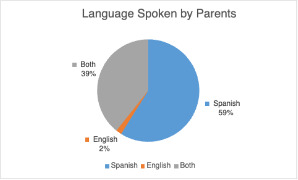
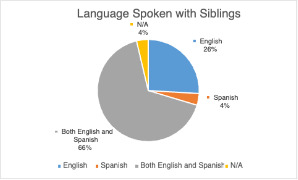
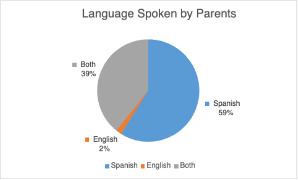
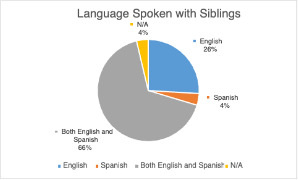
The majority of the student participants indicated that their parents spoke only Spanish (59%), while others were raised by parents who spoke both Spanish and English (39%) or only English (2%), as shown in Figure 5. When asked what language was predominantly spoken with their siblings, the vast majority indicated that they spoke both English and Spanish (69%), while others spoke only English (27%) or only Spanish (4%), as shown in Figure 6. When asked to describe themselves with a language label of English speaking, Spanish speaking, or bilingual, 94% of the participants identified as bilingual, and 6% of the participants identified as English speaking.
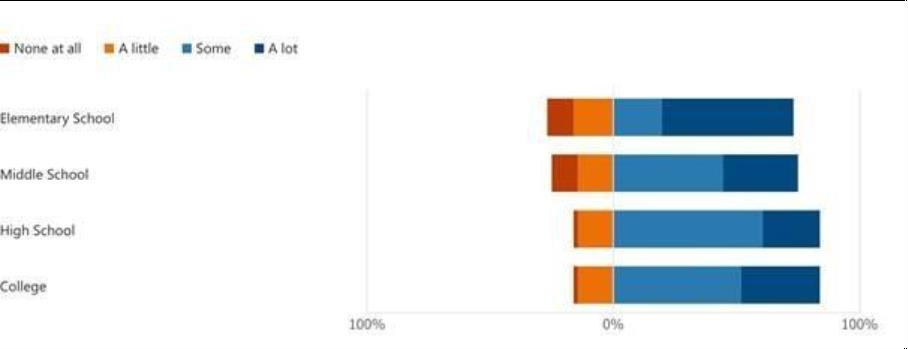
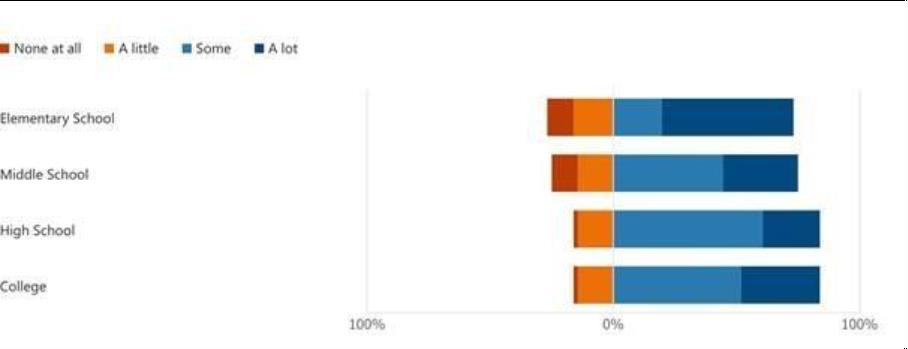
The student participants were asked about their language use at different periods of their childhood to better understand how their language dominance and identity changed over time. During their time in elementary school, 53% of students reported using Spanish a lot, most likely due to their home language being primarily or exclusively Spanish. This trend of using Spanish decreased through their time in middle school and high school, but there was a slight increase of Spanish usage during their time in college as 30% of students stated they used a lot of Spanish compared to 22% who used a lot of Spanish in high school, shown in Figure 7.
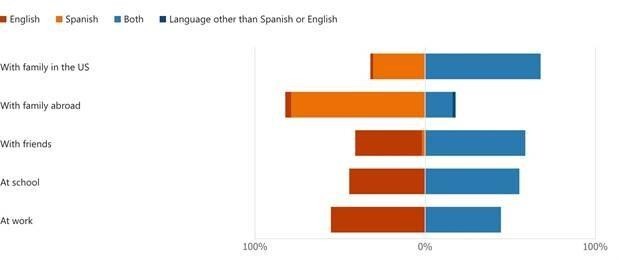
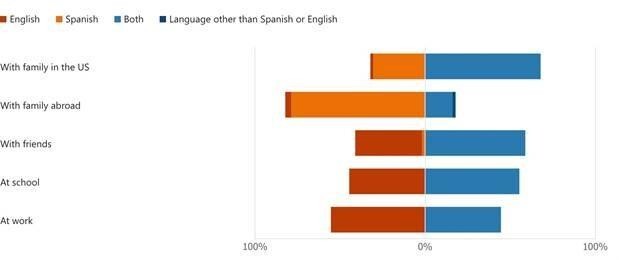
When asked about language choice in different environments, 42 participants stated that they tended to use Spanish a lot with family abroad, in comparison to the 37 participants that use both Spanish and English with family in the United States (see Figure 8). However, in other environments, participants tended to use both Spanish and English, or only English.
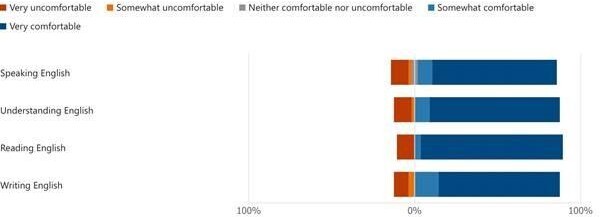
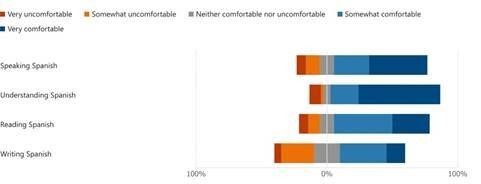
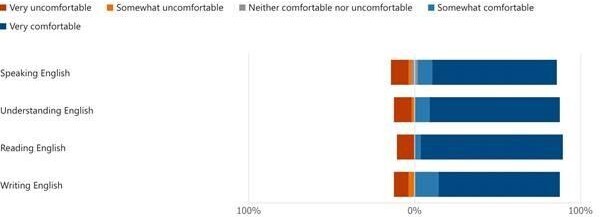
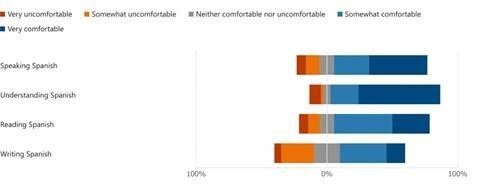
Student participants were asked about their comfort level when speaking, understanding, reading, and writing in English (Figure 9) and in Spanish (Figure 10). Participants reported being very comfortable in all skills in English, with the highest level of comfort in reading. In Spanish, however, there was a greater variety in their reported comfort levels, with participants feeling most comfortable when understanding Spanish and least comfortable when writing in Spanish.
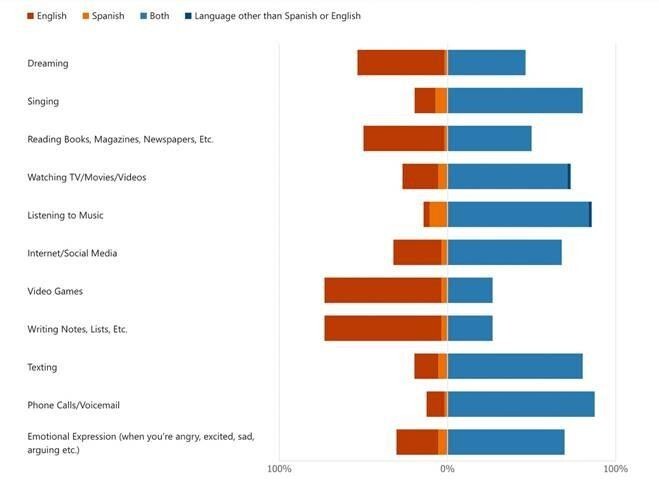
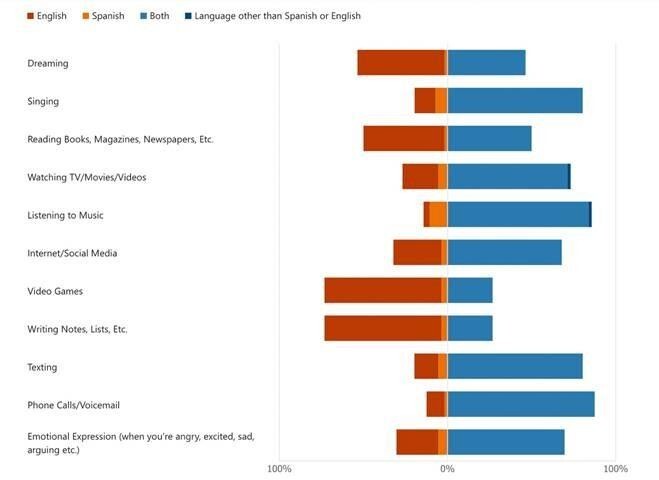
When asked about their choice of language in a series of different scenarios, the majority of participants tended to use English or both English and Spanish as their language of choice, with only a few participants choosing only Spanish (see Figure 11). Many participants indicated that they strongly tend to use English when playing video games, writing notes or lists, and dreaming. Additionally, many participants stated that they tend to use both English and Spanish when singing, watching television or videos, listening to music, using social media, texting, taking phone calls, and expressing their emotions.
The majority of faculty and staff also indicated that they use both Spanish and English when interacting with Spanish-speaking Hispanic students. Participants stated that within Spanish classes, they will only interact with students in Spanish; however, outside of class language usage depended on the language used by the student or the topic of conversation. However, one participant stated that “…I tend to use Spanish most of the time as I know they do not use Spanish with other people on-campus” (P38, faculty).
Additionally, when asked about what languages they observe students using, faculty and staff participants said that Hispanic students tended to interact in both English and Spanish, depending on the context. Reasons for different language usage included the conversation topic and the size of the group, with one participant stating “Since some Hispanic students do not speak Spanish, I feel like many students stick to English when addressing the group in general but then switch to Spanish/Spanglish when speaking one-on-one or a smaller group” (P32, faculty). Finally, one participant observed a change in language usage depending on if the students were graduate or undergraduate students, stating “Usually, undergrads use more English than Spanish, but that probably is because they interact with other students that speak basically English” (P33, faculty).
Impact of Spanish Classes and Organizations on Hispanic Students’ Identity
To understand the impact of Spanish classes and Hispanic organizations on their sense of self and identity, students were asked about their overall involvement on-campus, if they felt these organizations and classes were important in maintaining their cultural identity, and if they felt an increased sense of belonging on-campus through participating in these organizations or classes.
On average, the responses from participants regarding their involvement in on-campus organizations were divided. For the 23 freshman or first-year participants, 11 (48%) said they were currently involved with on-campus organizations, while 12 (52%) said they were not. Of those 11 participants, the majority said they were involved with a Hispanic cultural center, as well as the pre-college mentor program and a Hispanic fraternity. Roughly one-third (6) of sophomore participants said they were involved in on-campus organizations while the remainder (12) were not. This data could potentially show a decline in involvement among sophomore or second-year participants. However, this may just be an artifact of the participant pool due to the limited number of participants gathered for the sophomore, junior, and senior student demographics in the study. The junior or third-year participants also had a lower amount of involvement in on-campus Hispanic student organizations. Only 4 out of the 10 participants reported involvement in on-campus organizations, with 3 of those 4 participating in the Hispanic cultural center and the pre-college mentor program. Finally, the seniors or fourth-year participants reported higher involvement with 3 out of 5 participants actively involved in organizations such as a Hispanic cultural center, a pre-college mentor program and a Hispanic fraternity.
To better understand if there was a relationship between the student’s comfort level in Spanish and their participation in Hispanic student organizations, their self-provided comfort level in speaking was compared with their participation in organizations. There was no clear correlation between their comfort speaking Spanish and their involvement in Hispanic student orgs, with students almost equally split between involvement and no involvement. This is most likely due to the fact that the student organizations conduct their meetings and activities primarily, if not exclusively, in English.
Of the student participants, 48 reported feeling that Spanish classes or involvement in Hispanic organizations were important in maintaining one’s sense of belonging and cultural identity. One important aspect mentioned among participants was how on-campus Hispanic organizations helped strengthen and maintain connections to one’s heritage culture, as well as create relationships with other Hispanic students, with participants stating that: “coming to …[the university] did bring a fear of losing my cultural identity but because I found great organizations I was able to stay in touch with that part of myself” (P26, student). Another participant remarked on how heritage Spanish classes helped them feel like a connected family.
Additionally, many students reported changes in their sense of cultural belonging and identity through said on-campus organizations and Spanish classes. These classes and organizations have provided outlets where students are able to learn and practice Spanish without judgment or fear, as well as connect with other students who may share similar cultural upbringings, values, and experiences.
Some participants also noted the importance of these on-campus organizations and classes for Hispanic students at a predominantly white university. One student shared, “these avenues enable continuous learning about our heritage, countering the tendency to assimilate into mainstream “white-washed” or “Americanized” norms, particularly within predominantly white educational institutions…” (P4, student). Another participant felt that “…it’s important for Latino students to take up space and make themselves seen and represented in a predominantly white school” (P21, student).
Among the participant responses, a majority stated that participation in Spanish classes and Hispanic organizations has positively influenced their sense of belonging on-campus, helping them find community and comfort through said organizations and classes. One participant stated that “… I feel like I am a part of something bigger than myself and making a difference in my community here at … [the university] and representing the Hispanic people here well” (P28, student), and another participant commented that “Spanish class 215 and the Hispanic organizations here at … [the university] have influenced my sense of belonging because it has felt like a home and a family and everyone is welcoming as long as you put in the effort” (P22, student).
One participant asserted the importance of student organizations over Spanish classes alone, especially when those classes are taught by non-Hispanic faculty, stating:
To be frank, it’s clear that some professors are American, not possessing the depth of understanding of the Spanish language that native speakers do. This is why I don’t always feel swayed by Spanish classes alone. Student organizations, on the other hand, are driven by students for a purpose. Personally, I find fulfillment in educating others about our culture within these settings… (P4, student).
When asked if the participants felt comfortable participating in Spanish classes and Hispanic on-campus organizations, a large majority expressed that they felt comfortable and welcomed, stating “…I’m with people who have had similar experiences as me and know what it is like to be a minority in a PWI” (P13, student). Another student stated that “…I find great comfort in engaging with these organizations as they provide a sense of belonging within a PWI. Moreover, our inclusive nature fosters an environment where non-Hispanic students are encouraged to explore and learn about our culture alongside us” (P4, student).
However, roughly 20% of the participants stated that they did not feel comfortable participating in said organizations and classes, stating various reasons including “Growing up I always felt ‘less Mexican’ compared to other kids in school…” (P7, student), and that “… I feel as though I am not Hispanic enough” (P54, student). Other participants stated that the Hispanic organizations felt too exclusive and that they felt “A little uncomfortable just because I’m a bit whitewashed, but I think it’s important to stay connected to my people” (P46, student).
The faculty and staff participants expressed that involvement in Hispanic organizations and Spanish classes serve an important role for Hispanic students, with some participants stating that “I think it plays a huge role in maintaining the cultural identity. I think organizations like … (the Hispanic cultural center) permit students to show up as their entire selves within a setting where they’re able to identify with individuals who share cultural similarities” (P1, faculty).
Other participants said that:
It is important for students to be able to connect with their home language so they can maintain that part of their identity and culture. This is partially achieved through literacy in a language, which is something that Spanish classes offer. Connecting Hispanic students with other students through organizations and volunteering helps them strengthen their cultural bonds and feel more at home on campus (P30, faculty).
Overall, many participants expressed that having access to Hispanic organizations and Spanish classes is extremely important for helping Hispanic students to strengthen their cultural identity and sense of community on campus, with another faculty member stating:
For Spanish classes, it depends on the topic. If they’re taking a class on Spain and they’re Mexican, that isn’t going to play a role in maintaining their cultural identity. A class on Mexico, however, may lead them to learn new things about their culture and feel pride in it. I think involvement in Hispanic organizations is important for maintaining their cultural identity as well, though I think it again depends on the makeup of the organization. If they’re Bolivian and everyone else is Mexican, they may feel a kind of pan-Hispanic or Spanish-speaking identity from being in the US, but I don’t know that it would help them maintain their Bolivian cultural identity specifically. I assume that is an outlier situation though, with most students coming from a select group of Hispanic cultures. (P34, faculty).
Overall, looking at the linguistic and cultural profile of the students, most of the participants self-identified as with broader cultural identities such as Hispanic or Latino. Additionally, most participants reported being raised in their households with solely Spanish or both English and Spanish, which demonstrates that most participants had exposure to the Spanish language from a young age as they were not raised solely with English. When discussing Spanish usage in academic environments, participants reported the highest use of Spanish in elementary school. This use of Spanish decreased from “a lot” to “some” throughout middle and high school, but participants did show an increase in their reported use of Spanish in college as more participants began to once again use “a lot” of Spanish. Furthermore, since attending the university, most participants found that involvement in Spanish classes and Hispanic on-campus organizations held importance in maintaining their sense of belonging and connection to their cultural identity. However, participants raised important issues regarding not feeling comfortable enough to participate in these classes, organizations, and resources due to the issues such as not feeling “Hispanic enough”, compared to other Hispanic students.
Future Additional Resources
To understand how the university can improve their current classes, organizations, and resources for Hispanic students, both participants and faculty were asked their opinions on areas of improvement.
In general, many participants voiced the need for additional support and resources to be placed into hosting more cultural events for Hispanic students, such as adding “…more diverse food and recognition outside of holidays” (P13, student). Participants also voiced the need for more Hispanic professors and counselors, as well as “More classes that offer Spanish for bilinguals or to put together more classes with more diversity” (P22, student), and that “…more bilingual classes at … [the university] will help create a more diverse curriculum experience for students and to have more diverse teachers in classes so students who come from a Hispanic background can feel comfortable learning” (P28, student).
Faculty and staff participants expressed a variety of different resources of ways in which the university can help enhance heritage culture and linguistic connection for Hispanic students, including more events on campus and within the community, such as “More university wide initiatives during Hispanic Heritage month. Encourage more students/faculty to forge partnerships/converse more with the Hispanic community” (P1, faculty).
Additionally, participants expressed a need for “Better classes in Spanish that focus on topics that are relevant and interesting to Hispanic students; more volunteer opportunities to use their Spanish outside of class; Spanish Book Club; Spanish theater group” (P30, faculty). Participants also indicated a need for greater monetary support to support future initiatives.
Student Interviews
Following the survey, two student participants agreed to be interviewed about their personal experiences at the university. When asked about their cultural self-identification, the first participant (P35, student) spoke in depth about their experiences identifying as Argentinian and Latina. As they were born in Argentina, they have always felt connected to their Argentinian heritage; however, coming to the university provided an opportunity to connect with other students on a broader scale of Latino and Hispanic heritage. The second participant (P27, student), spoke about identifying as Mexican and Mexican American since they were born in the United States but were raised in Mexico and around Mexican culture. Both participants’ responses of self-identification align with the student participants’ responses in the survey, highlighting how Hispanic students at the university tend to culturally identify as Latino, Hispanic, or Mexican.
Both participants also spoke about their involvement in on-campus Hispanic organizations and Spanish classes. P35 spoke about their affiliation with the Hispanic cultural center and the pre-college mentor program, as an intern and mentor, stating that these organizations have provided a sense of place and acceptance with the Hispanic community both on and off campus. Similarly, P27 spoke about their involvement in the pre-college mentor program, saying that it has provided a connection with Hispanic students that they wished they had when preparing for college. Additionally, P35 highlighted how Spanish classes at the university have helped to not only improve their use of Spanish but to also open their minds to other cultures and experiences. P27 also stated that they enjoyed their experiences taking Spanish classes at the university since it’s provided an environment to be around other bilingual students and learn more Spanish. Both students highlight the belief that Spanish classes and organizations promote one’s use of Spanish and their sense of belonging on campus.
When comparing their use of Spanish and English, P27 highlighted how they tend to use more Spanish than English in their daily life. More specifically, they stated that they tend to use Spanish with their family and in their Spanish classes, and the only environment that they tend to strictly use English was at their work. P35 also tended to use only Spanish with their family and friends from Argentina, as well as their therapist, since they prefer to use Spanish more when expressing themselves and their emotions. While on campus and interacting with other students at the university, P35 tends to use mainly English, however, on-campus Hispanic organizations and Spanish classes have helped to incorporate more Spanish in their academic life. Their responses support the majority of the student survey responses and highlight how Spanish classes and Hispanic organizations have helped to incorporate more Spanish into their lives on the university’s campus.
Faculty Interviews
Following the survey, two participants who serve as faculty and staff at the university, agreed to participate in an interview. The first participant (P32, faculty) is primarily involved with the interpersonal violence resource office as a lead advocate, and the Hispanic cultural center as a graduate student intern. The second participant (P31, faculty) is a professor of psychology who mentors students inside and outside the classroom and is involved with the Hispanic cultural center. When interacting with students in class or through on-campus organizations P31 stated that they tend to use Spanish with students in more relaxed social settings but tend to use English when doing research or in the laboratory. On the other hand, P32 tended to use either Spanish or English depending on the students’ comfort level with either language or whichever language they begin the conversation speaking. Although both faculty members vary in their use of Spanish, P32 response of how they tend to use Spanish if the student is comfortable with the language, highlights a potential benefit of Spanish classes and Hispanic organizations, as they may help students gain confidence in their use of Spanish.
When asked about the issue of the declining usage of Spanish and heritage languages among 3rd generation in the United States, P32 highlighted how in their personal experience, their parents discouraged the use of Spanish to prevent the participant from facing potential discrimination and racism. Additionally, P32 spoke about how there are many reasons why someone may or may not speak Spanish or their heritage language, and that faculty and staff need to be more open-minded to their experiences and understanding of different levels of Spanish. Among Hispanic students at the Hispanic cultural center, P32 stated that there are some who feel a great sense of connection to their heritage culture. However, there are also students who do not feel “Hispanic enough”, so, faculty and staff need to be aware of not pushing away the students who do not feel as comfortable as other students. Furthermore, P31 highlighted issues within the current political climate, especially with DEI policies and with the North Carolina Board of Governors’ decision to repeal Section 300.8.5 and Section 300.8.5[R] of the university systemwide Policy Manual. This decision to repeal said sections of the university systemwide Policy Manual will have large impacts on the resources available for Hispanic on-campus organizations and for diversity initiatives across the university. P31 stated that these issues discourage the appreciation of cultures and the Spanish language; therefore, it is crucial that the university makes an effort to promote this “sense of home” among Hispanic students.
Both faculty members raise important issues that Hispanic students face, whether it is how their personal experiences have shaped their sense of connection to their heritage culture, or how their “sense of home” on campus is threatened by changing DEI policies. These issues showcase the importance of access to Spanish classes and Hispanic organizations as they not only foster a safe environment for Hispanic students but also promote the exploration of themselves whether that is through their use of the Spanish language or connection to their heritage culture.
DISCUSSION
The purpose of this study was to create a linguistic and cultural profile of Hispanic students at this university and understand how Spanish classes and Hispanic organizations impact their sense of identity. Additionally, this research study aimed to understand if this university successfully promoted an increased use of Spanish among college students, as well as understanding how it can be further improved.
The results of this study indicate an increase in Spanish usage among Hispanic college students since coming to the university, compared to middle school and high school. Additionally, this study supports the importance of Hispanic on-campus organizations and Spanish classes in promoting heritage cultural identity and heritage language maintenance. Key Findings
The aim of this study was to explore three main research questions, the linguistic and cultural profile of Hispanic students at the university, the impact of Spanish classes or Hispanic on-campus organizations on Hispanic students’ identity, and how the findings from this study can be beneficial for other universities.
The results from the study showed that student participants primarily culturally identified as either Hispanic, Mexican, or Latino. This means that the majority of student participants primarily connected themselves to a broadened identity, or an overall communal identity as either Hispanic or Latino, rather than identifying solely with their specific heritage culture(s). In terms of their linguistic profile, a majority of student participants self-identified as bilingual and were raised speaking either solely Spanish or both Spanish and English. However, the results of this study show that, on average, participants are more comfortable with their use of English rather than Spanish. In fact, most participants felt either “very comfortable” when speaking, understanding, reading, and writing English, while comfort levels with Spanish tended to vary much more.
In terms of language usage in school, most student participants reported using “a lot” of Spanish in elementary school, with those numbers continuously declining before attending college. Although a large majority of student participants indicated that they were raised with Spanish at home, many experienced a continuous decrease in Spanish usage as they entered the educational system, as many schools and classes use primarily English. Therefore, many students experienced an increase in their English proficiency and a decrease in their Spanish proficiency in school, especially in middle school and high school. Additionally, students experienced an increase in their Spanish usage in college due a strengthened sense of belonging and connection to their heritage identity (through involvement in Hispanic on-campus organizations and Spanish classes). Faculty and staff participant responses also supported the responses of students, stating that Hispanic students tended to use a mixture of both English and Spanish depending on the context. That being said, the results of this study show that students largely tend to culturally identify with their heritage culture, and they linguistically identify as bilingual with English and Spanish.
The second aspect of this study looked at the importance of Hispanic on-campus organizations and Spanish classes, and how it may impact a student’s cultural identity and use of Spanish. Based on student participant responses, this study showed that nearly half of the freshman or first year students were involved with Hispanic on-campus organizations; however, the level of involvement continuously declined among sophomore (second year) and junior (third year) students. However, the level of involvement increased among senior or fourth year students, as 60% reported involvement. This increase in involvement levels among freshmen could be due to the overall need for establishing a sense of belonging and friendships. Many freshmen turn to on-campus organizations in order to establish a sense of community and find other students to connect with. Additionally, seniors tend to seek reconnection and networking opportunities before graduation; therefore, many seniors may experience an increase or resurgence in their involvement in Hispanic on-campus organizations. As the previous research question explored how Hispanic students saw an increase in their use of Spanish, compared to middle school and high school, students’ use and comfort level of Spanish may also influence their involvement with Hispanic on-campus organizations, as students who reported feeling “very comfortable” speaking Spanish tended to show greater involvement levels.
Despite low involvement levels, especially among sophomore and junior student participants, a large majority of student participants still indicated that they felt Spanish classes and Hispanic organizations were important in maintaining their sense of belonging and cultural identity. Many students also felt that they experienced a strengthened sense of cultural belonging and identity, and that Spanish classes and Hispanic organizations have positively influenced their sense of belonging on-campus. Faculty and staff participants shared similar responses, highlighting their belief that these organizations and classes positively impact Hispanic students’ sense of belonging and heritage cultural identity. While a large majority expressed that they felt comfortable and welcomed in these Hispanic on-campus organizations and Spanish classes, the one-fifth of student participants who indicated that they don’t feel comfortable bring to light a serious problem of feeling as if they are “not Hispanic enough” or not connected enough to their heritage culture, which has also led to a sense of not speaking Spanish well enough. That being said, based on the findings of this study, many participants find that it is important to ensure more inclusive access to Hispanic organizations and Spanish classes to increase the comfort levels of involvement and ultimately strengthen their cultural identity and sense of community on-campus. Based on participant responses in the survey, a more inclusive environment for Hispanic students on campus can be achieved through increased promotion and outreach of Hispanic on-campus organizations, as well as increasing visibility and resources for students who may struggle with connecting to their heritage culture. Additionally, improved access to Spanish classes for heritage learners with culturally relevant curricula may also create a more inclusive environment where heritage speakers feel more comfortable and inclined to enroll in Spanish courses. Further promoting student leadership opportunities within Hispanic on-campus organizations may also increase visibility for heritage speakers and give them a platform to share their experiences and input on future initiatives, which may also increase involvement for new and existing members.
The final aspect of this study aims to understand what this research can be used for and how it might benefit this university and other campuses. Based on the gathered data, many Hispanic students have experienced an increase in their use of Spanish and overall sense of heritage cultural identity since coming to college. Hispanic on-campus organizations and Spanish classes can help further promote the linguistic and cultural identities of these students, as well as strengthen their sense of belonging on-campus by creating a culturally safe space for Hispanic students. Applying the gathered data and responses of the student participants, as well as the faculty participants, can be beneficial for this university and other campuses by promoting the need for safe spaces for Hispanic students. This university, as well as other campuses, can also use the input of the participants in this study on how they can better their campus environment, whether that is through promoting more Hispanic cultural events, clubs, organizations, and classes, or by hiring more Hispanic-identifying faculty and staff to create an inclusive academic environment. Additionally, based on participant responses from survey questions regarding areas of improvement for the university and access to these resources, achieving a more inclusive environment could also mean hiring faculty and staff with specializations in teaching heritage centered classes, or Spanish classes with a greater emphasis on diverse cultures. By hiring faculty members with experience teaching heritage-based classes and heritage learners, this may provide a more inclusive environment for heritage language learners to express their personal experiences in connection with the curriculum of the course.
Limitations and Suggestions for Future Research
The first limitation of this research study is that it was only conducted in one location, gathering data from students and faculty from one university. Demographics can change widely between different cities and states, and by conducting this research in one specific location, it limits the data that can be gathered from a wider pool of participants. Additionally, out of the students who participated in this study, there was unequal representation between the years of students. This study gathered 23 responses from freshman or first year students, as well as 18 responses from sophomore or second year students, however, only 10 responses from juniors or third year students and 5 from seniors or fourth year students. Without material incentives for students to participate in the study, it is difficult to ensure a large and diverse pool of students. Furthermore, without material incentives, it proved difficult to gather participants to consent to anonymous interviews. This study conducted 4 interviews, 2 with faculty participants and 2 with student participants; however, in future studies, an incentive for participants may help to increase voluntary interview participation.
Furthermore, the survey and interviews of this study were conducted before the North Carolina Board of Governors repealed Section 300.8.5 and Section 300.8.5[R] of the university systemwide Policy Manual. Following the repeal of Section 300.8.5 (Policy on Diversity and Inclusion Within the University of North Carolina) and Section 300.8.5[R] (Regulation on Diversity and Inclusion Within the University of North Carolina), the university replaced its diversity, equity, and inclusion (DEI) policy with the equality policy, which ultimately closed the Office of Institutional Diversity and Inclusion (OIDI) and eliminated the position of Chief Diversity Officer. The Hispanic on-campus organizations were also greatly impacted by this policy, such as the Hispanic cultural center, which had its full-time staff members relocated to other offices, and the budgets for each organization were not accessible.
Conclusion
The goal of this study was to form a linguistic and cultural profile of Hispanic students at this university, understand the impact of Hispanic student organizations and Spanish classes on heritage cultural identity and language, and how this research might be beneficial for other college campuses or schools.
Findings indicate that while students tend to identify both culturally and linguistically with their heritage language and culture, comfort levels with Spanish tend to vary greatly compared to comfort levels with English. The gathered data from this study also shows that the level of involvement of Hispanic students fluctuates based on their year, where juniors and sophomores have lower involvement compared to seniors and freshmen. However, both student and staff participants emphasize the importance of Hispanic on-campus organizations and Spanish classes for promoting connection to Hispanic students’ heritage cultural identity, as well as their overall sense of belonging on-campus.
This research also discusses the importance of addressing critical challenges that impact Hispanic student involvement in said organizations. Whether it is creating a more inclusive environment for the students who do not “feel Hispanic enough”, or by addressing recent policy changes that have negatively impacted access to these organizations, this study emphasizes the need for greater support for these programs and classes within this university and on other campuses as well.
Overall, this study highlights the important role that Hispanic organizations and Spanish classes play in the personal lives of Hispanic students at the university. By strengthening their connection to their heritage culture, as well as their sense of belonging and community on-campus, Hispanic students benefit greatly from an inclusive and supportive campus environment.