
1. Introduction
The Spanish of Yucatan, Mexico is a distinctive regional variety in contact with Yucatec Maya[1], an indigenous language spoken by half a million people in the state of Yucatan, along with 175,000 in Quintana Roo and 71,000 people in Campeche, the three states that comprise the Yucatan Peninsula (INEGI, 2020). Yucatan Spanish (YS) has interested researchers for two primary reasons. First, the history and sociolinguistic context of Yucatan make it one of the areas of Latin America most likely to show indigenous language influence (Klee, 2009). YS shows numerous features that have been attributed to the direct or indirect influence of Maya. These include various distinctive phonetic/phonological variants, including both suprasegmental features, such as rhythm and intonation (Michnowicz & Barnes, 2013; Michnowicz & Hyler, 2020) and segmental levels, such as the labialization of /n/ in word-final position, the use of voiced stops in linguistic contexts that normally require approximants, glottalization between hiatus vowels, and the focus of this study, aspirated /ptk/ (García Fajardo, 1984; Michnowicz, 2008, 2012; Michnowicz & Kagan, 2016; Suárez, 1945/1979; Yager, 1982). Second, studies on YS have repeatedly found that young speakers are rapidly moving away from traditional, possibly Maya-influenced forms, in favor of Central Mexican or Pan-Hispanic norms (Michnowicz, 2015). At the same time, the results of several of these studies are inconclusive regarding the future trajectory of YS, reinforcing the need for additional research that examines possible changes in the dialect across real time.
The present study seeks to provide additional insight regarding the future development of YS through a sociophonetic analysis of aspirated /ptk/, in both apparent and real sociolinguistic time. In particular, the results of a previous apparent time study on this feature of YS (Michnowicz & Carpenter, 2013) were inconclusive concerning changes across time, and the present analysis employs both generational differences (apparent time) as well as additional data collected eleven years later (real time) to clarify the original results and to more confidently document the realization of aspirated /ptk/in the dialect.
The rest of the article is structured as follows. Section 2 provides an overview of the literature on the aspiration of /ptk/ across Spanish dialects, both monolingual and bilingual varieties. Section 3 details apparent and real time as methods for studying language change across time in sociolinguistics, with the research questions outlined in Section 4. Section 5 explains the methodology, with results in Section 6. Finally, Section 7 further discusses the results in the context of previous studies, providing insights into the development of YS /ptk/ across time.
2. Spanish voiceless stops in monolingual and contact varieties
a. Aspirated stops in monolingual and bilingual Spanish
The voiceless stops /ptk/ are characterized by a complete occlusion followed by the release of the stop before the beginning of voicing of the following segment (Thomas, 2011, p. 91). The time between the release burst and the onset of voicing can result in audible aspiration, depending on the duration of the delay, leading to variable realizations of /ptk/ as either unaspirated [ptk] or aspirated [pʰtʰkʰ]. For example, the words pan (bread), taza (cup), and casa (house) can be pronounced variably in YS as [ˈpam]/[ˈpham], [ˈta.sa]/[ˈtha.sa], and [ˈka.sa]/[ˈkha.sa]. The level of aspiration is most often examined acoustically through Voice Onset Time (VOT), a measurement in milliseconds (ms) of the time elapsed between the release of the consonant occlusion and the onset of voicing (Lisker & Abramson, 1964). VOT varies across and within languages, and voiceless stops may be articulated as short-lag (0-30ms VOT) or long-lag (>30ms VOT). Short-lag occlusives are generally considered unaspirated, while long-lag stops are classified as aspirated (Cho & Ladefoged, 1999). Generally, Spanish is considered a prototypical short-lag language, where /ptk/ are unaspirated (Hualde, 2005), with VOT values between 4 and 36ms across monolingual varieties (e.g., Puerto Rican Spanish, Lisker & Abramson, 1964; Peninsular Spanish, Rosner et al., 2000). Cross-linguistically, VOT varies according to several linguistic factors, such as syllable tonicity, with more aspiration in tonic syllables (Lisker & Abramson, 1967); following segment, with low vowels prompting shorter aspiration (Fischer-Jørgensen, 1972; Klatt, 1975), position in the word, with increased aspiration word-initially (Cooper, 1991; Jun, 1995), and point of articulation, with consonants articulated further back in the mouth showing longer VOTs, so that /p/ < /t/ < /k/ (Lisker & Abramson, 1964).
Although monolingual Spanish has unaspirated [ptk], numerous studies have shown that VOT values are susceptible to cross-linguistic influence in situations of bilingualism. There are regions of Latin America where Spanish is in contact with long-lag indigenous languages, providing additional contexts to examine the possible outcomes of language contact on voiceless stop realization.
In the Andean region, Babel (2017) finds both aspirated and ejective variants in Spanish in contact with Quechua, where these variants occur primarily in Quechua loanwords. In a perception study, Babel (2017) found that while speakers could distinguish between laryngealized (aspirated or ejective) and short-lag stops, they were not able to distinguish reliably between aspirated and ejective realizations, suggesting that Spanish speakers may collapse them into one category (see the discussion for more on this possibility). Despite the lack of phonological status, there was an indication that laryngealized consonants can serve as a regional identity marker for some speakers in the Andean region.
Regarding contact with Mayan languages, which also have aspirated and ejective variants of /ptk/, McKinnon (2020) investigates the production of /ptk/ among Kaqchikel-Spanish bilinguals in Guatemala. McKinnon observed a significant effect of sex, with male speakers producing longer VOTs than females. He also noted that bilingual speakers exhibited higher mean VOT values than monolinguals, although the difference was not statistically significant. While some studies on YS (see below) suggest an ongoing change towards shorter VOTs, McKinnon found no evidence of ongoing change in the Guatemalan context. McKinnon’s (2020) findings point to differing levels of language contact intensity between Guatemala and some other areas, such as urban Yucatan, as a possible explanation for the relatively lower degree of standardization of /ptk/ among Guatemalan speakers.
Turning to Yucatan, early studies of YS identified the aspiration of the voiceless stops /ptk/ as a striking feature of the dialect, reporting increased aspiration compared to other varieties of Spanish (Nykl, 1938; Suárez, 1945/1979). This stronger aspiration is often attributed to the influence of the contact language, Yucatec Maya, since this language has both aspirated and ejective voiceless stops, and VOT values in Maya are longer than those typical of Spanish[2]. Regarding Maya influence on YS, Nykl (1938) identifies “las consonantes heridas” (i.e., aspirated or ejective stops) as a direct carryover from Maya, and notes that these variants give YS a distinctive sound that is like “estar oyendo hablar en castellano a un comerciante alemán” “hearing a German merchant speaking Spanish” (p. 217), and Suárez (1945/1979) comments on “the explosive force” of /ptk/ as an important feature (p. 78). These early studies offer broad observations about YS /ptk/ as distinct from other Spanish varieties, setting the stage for later work that explores VOT through a sociolinguistic lens.
Later quantitative studies report that aspiration in YS is not as strong as early reports suggest, but that VOT values are still longer than those found in other regions, such as Spain or the Caribbean (Alvar, 1969; Coupal & Plante, 1977). Aspirated variants are reported in word-initial position, tonic syllables, and during emphatic speech (García Fajardo, 1984; Yager, 1982). In a detailed sociolinguistic study, Michnowicz & Carpenter (2013) analyzed VOT among Maya-Spanish bilinguals and Spanish monolinguals. Their analysis revealed that, despite mean VOT values showing only slightly longer means than those of monolingual Spanish varieties, the distribution exhibited a markedly broader range. They hypothesized that the presence of tokens with exceptionally long-lag VOT, far exceeding typical monolingual norms, contributes to the perception of aspiration in YS voiceless stops. Regarding social factors, Michnowicz & Carpenter (2013) did not find any significant differences between Maya-Spanish bilinguals and Spanish monolinguals, mirroring the findings in Guatemala (McKinnon, 2020), and the pattern for age group was unclear, with significantly shorter VOTs among younger speakers only for /t/. A comparison of age group and language background did find a significant reduction in VOT among the youngest monolingual Spanish-speakers, suggesting that this group was moving towards shorter VOT values, like those found in non-contact varieties. Still, given that previous studies on other phonological features of YS have found a marked decrease among the youngest age groups (Michnowicz, 2015), the lack of clear results for age group in Michnowicz & Carpenter (2013) brought into question the future development of YS /ptk/, which the present study seeks to address via the addition of a real-time comparison group.
b. Historical emergence and diffusion of aspirated /ptk/ in Yucatan Spanish
Early patterns of language contact in the Yucatan region provide important context for the presence and spread of aspirated voiceless stops in this Spanish variety. Towards the end of the 1800s, as contact increased between rural Maya-speakers and urban Spanish-speakers (see Klee, 2009; Mosely, 1980), aspirated and even ejective /ptk/ would have formed the input for a large number of speakers from all social classes (e.g., see Michnowicz, 2009 on the role of Mayan nannies). As Babel (2017) found in the Andes, Spanish speakers would have had difficulty distinguishing between aspirates and ejectives, collapsing them into aspirated variants, which are cross-linguistically less marked[3]. Given the greater cross-linguistic markedness and articulatory complexity of ejectives, it is unlikely that Spanish-dominant or monolingual Yucatecos would acquire ejective /pʼtʼkʼ/, especially in the absence of consistent input.
Instead, usage-based accounts of phonological entrenchment (Bybee, 2003) suggest that bilingual input dominated by Maya-accented Spanish would be expected to produce intermediate VOT values, longer than monolingual Spanish but shorter than Yucatec Maya. Additionally, Flege & Eefting (1987) found that early bilinguals in Puerto Rico produced intermediate values in their L2 (English), due to the influence of foreign-accented English input. The situation among Maya-speakers in Yucatan mirrors that of Puerto Rico; Yucatan bilinguals often would have heard Spanish spoken by other L1 Maya speakers. Michnowicz, Natviq & Salmons (2025) further suggest that the phonological underspecification of Spanish /ptk/ (compared to voiced /bdg/ in Spanish and glottalized /p’t’k’/ in Maya) provides the conduit for bilingual, and later monolingual, speakers to integrate aspirated variants into their Spanish, as speakers maintain their underlying phonology but show surface-level cross-linguistic influence. Similarly, Flege & Bohn’s (2021) Revised Speech Learning Model (SLM-r) suggests that even when phonological categories are kept separate, surface realizations can show merged results due to a “common phonetic space” that allows for cross-linguistic influence (p. 44). As Yucatecos came into increasing contact with speakers from other regions, particularly Central Mexico, external norms that lacked aspiration began to compete with locally entrenched variants, as has been found for other features (Michnowicz, 2015). Traditional features of YS, such as the realization of final /n/ as [m], intervocalic stop realizations of /bdg/, and stress-timed vocalic and consonantal prosodic rhythm, are all documented to have declined significantly in favor of less marked realizations across sociolinguistic real time (Michnowicz, 2015, 2023; Michnowicz & Hyler, 2020). The present study examines whether the production of /ptk/ in YS aligns with the trajectory of other studied regional linguistic features. Collectively, this historical and sociolinguistic backdrop helps explain both the diffusion of aspirated /ptk/ into YS and the ongoing patterns of dialect leveling observed in recent decades.
3. Real and apparent time
Variationist sociolinguistics has two principal methodologies for identifying and analyzing language change across time. The first is the apparent time construct (Bailey, 2002), where observed differences across generations are understood to represent actual change across the time represented by the different age groups. Apparent time analyses remain the most widely used methodology, and numerous studies have confirmed the validity of apparent time as a means of observing language change (Labov, 1994; Sankoff & Blondeau, 2007). Still, the use of apparent time assumes the stability of the linguistic system in adulthood and the possibility that seeming generational differences are due to age grading, where speakers change while the community remains stable (Chambers, 2009; Labov, 1994).
Real time analyses, on the other hand, involve returning to a community after a certain number of years (most often 10-15) and collecting new data that can be compared with the initial dataset. While real time studies avoid the potential pitfalls of apparent time, they are infrequent due to the substantial time commitment, resource demands, and the challenge of sustaining researcher involvement over extended periods (Chambers, 2009). While apparent time and real time are often presented as two separate methodologies, they are most effective when used together to gain a more complete picture of change across time (Labov, 1994; Michnowicz, 2025). Given the documented patterns of change in other YS phonological variables and the lack of consistent apparent time evidence for YS /ptk/, this study advances previous work by using a real time, generational comparison to more accurately identify any ongoing shifts in the realization of aspirated /ptk/.
4. Research Questions
Based on previous studies on YS aspirated /ptk/, the goal of the present study is to answer the following research questions:
-
What linguistic and social variables favor aspirated /ptk/, as measured by VOT, in both real and apparent time in YS?
-
Does the addition of real time data confirm, refute, or clarify the predictions of the apparent time analysis for the future development of /ptk/?
-
Do aspirated /ptk/ in YS follow the findings of other real time studies on the dialect, specifically prosodic rhythm (Michnowicz & Hyler, 2020); final -m (Michnowicz, 2021); and intervocalic /bdg/ (Michnowicz, 2023), in a move away from regional variants?
5. Methodology
Data for the present study come from two collections of sociolinguistic interviews of 30 minutes each, collected in and around Merida, Yucatan, at two different points in time. The first set of recordings was collected by the first author in 2004/2005 and presents an apparent-time comparison across three age groups (Group A, speakers from age 50-90; Group B, speakers in their 30s-40s; and Group C, speakers in their late teens and 20s). These apparent time data were originally analyzed in Michnowicz & Carpenter (2013).
A second dataset was collected by the first author and a research assistant in 2016, 11 years after the initial data collection, to add a real time component. Rather than a complete real time replication of the original study, here we follow Trudgill’s (1988) truncated real time methodology, which adds additional time depth by including data from an additional group of young speakers, corresponding in age to the young speakers in the original study. In other words, both age groups C and D represent speakers in their late teens and 20s, but separated by 11 years in real time. Truncated real time studies have been described as “efficient” and “effective”, given that they permit researchers to confirm patterns indicated in the initial apparent time analysis, while requiring fewer resources than a full trend study (Labov, 1994, pp. 97–98). As numerous previous studies on YS have found that younger YS speakers are quickly abandoning traditional, regional forms (Michnowicz, 2015), the addition of a real time age group will allow for a clearer understanding of possible changes in aspirated /ptk/ across time than that afforded by the apparent time only analysis. Participant demographics across the four age groups are found in Table 1.
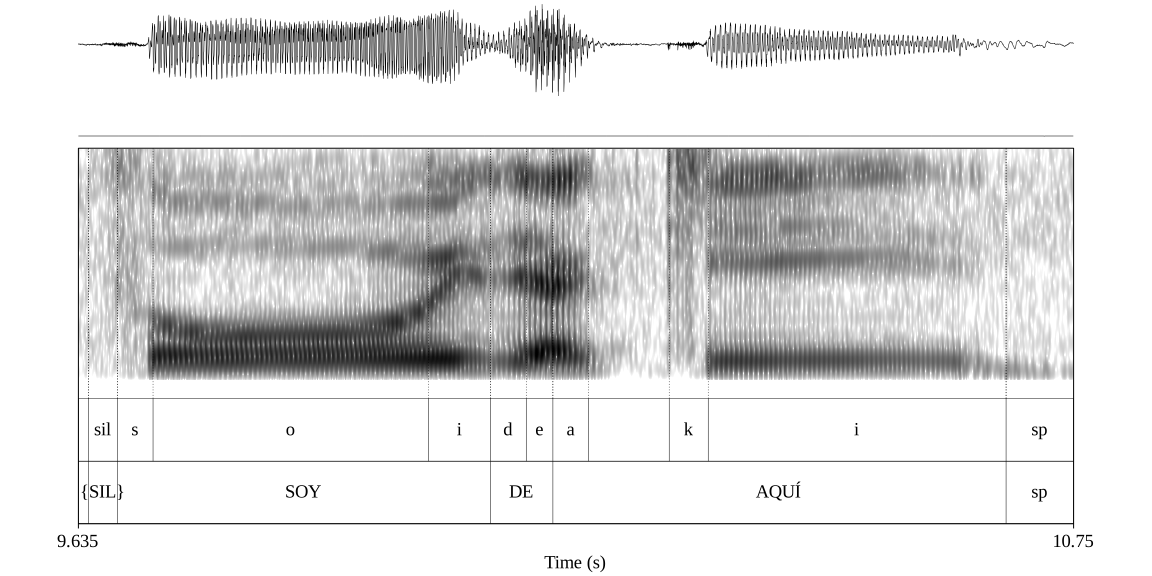
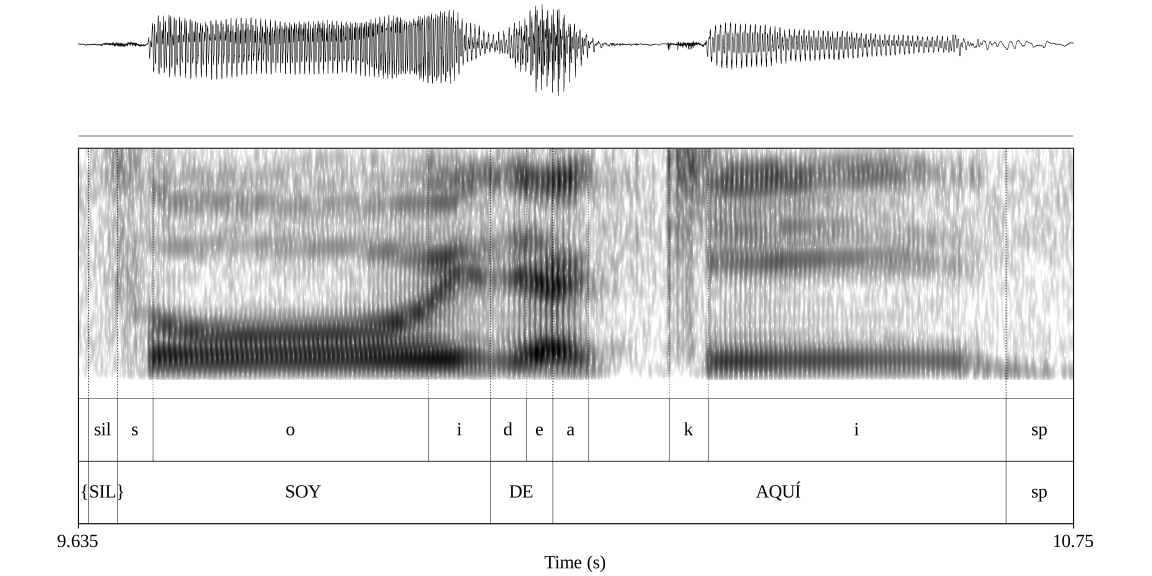
Data were transcribed in Praat (Boersma & Weenink, 2023), and force aligned with the Forced Alignment System for Español (FASE; Wilbanks, 2021), which allowed for the relatively quick coding of more than 10,000 tokens in the present study. The force aligned boundaries were manually moved to correspond to the VOT for the first 100 tokens each of /ptk/ per speaker. VOT was measured from the initial burst to the start of periodic voicing. Potential tokens with excessive background noise or other issues that could impact the measurements were excluded. Both co-authors adjusted boundaries for VOT, and all measurements were checked for consistency by the authors. There was a very high rate of interrater reliability (>90% across all interviews). An example of the force aligned transcription and the measurement of VOT (following boundary adjustment by the authors) is seen in Figure 1.
A total of 300 tokens were measured per speaker (100 each of /ptk/), for a total of 10,200 VOT measurements. Data were analyzed via main effects mixed-effects linear regressions using lme4 (Bates et al., 2015) in R (R Core Team, 2025). The continuous dependent variable was VOT, and seven independent variables were included; speaker was included as a random intercept (see Table 2). A minimal main effects model was fit via model comparison with ANOVA, and pairwise comparisons were examined via a Tukey post-hoc test using the multcomp package (Hothorn et al., 2008). Interactions among social variables were modeled and visualized with a mixed-effects conditional inference tree using glmertree (Fokkema et al., 2018).
6. Results
a. Mean VOT
The mean VOT across all speakers was 16.1ms for /p/, 21.1ms for /t/, and 31.4ms for /k/. A comparison of YS VOT with other dialects is found in Table 3. Maya-Spanish regions (both Yucatan and Guatemala; McKinnon, 2020) generally show longer VOT values than in other regions, although the differences are not always large. Bilinguals and monolinguals in Yucatan show very similar VOT values, regardless of language background. This finding will be addressed further below.
b. Statistical analysis
The results of the best fit mixed-effects linear regression with a random intercept of speaker are found in Table 4. The regression found significant effects of phone, following segment, speaker sex, and age group. In the table, a positive estimate favors a longer VOT.
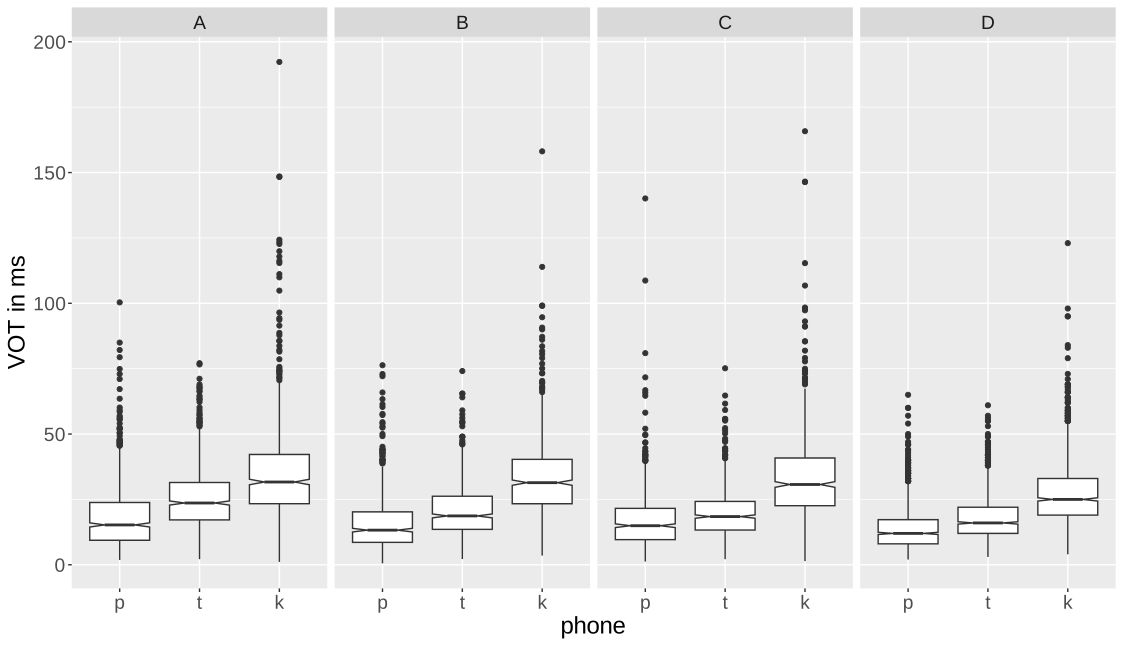
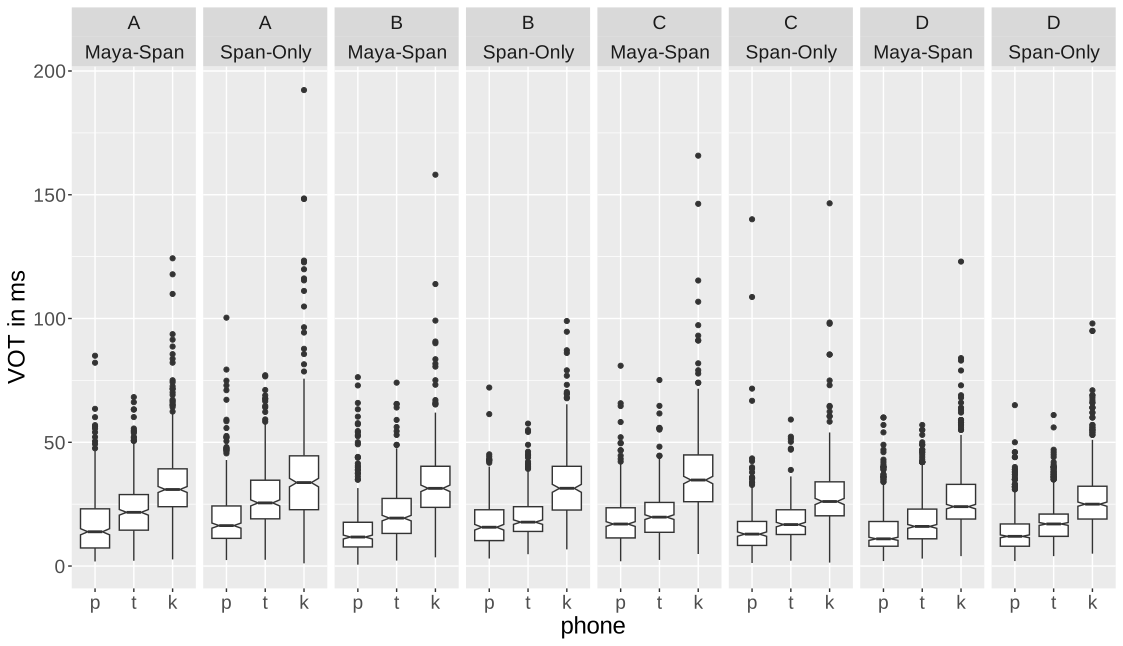
The following box-and-whisker plots present the significant variables in the analysis. A box-and-whisker plot summarizes the distribution of a variable by showing the median (black line), interquartile range (the box), and overall spread (the box and whiskers), with outliers plotted individually (black dots). The box spans the 25th–75th percentiles, and the whiskers extend to the most extreme non-outlying values. The 95% confidence interval notches around the mean provide a visual estimate of the precision of group means, where limited overlap suggests more reliable differences between groups.
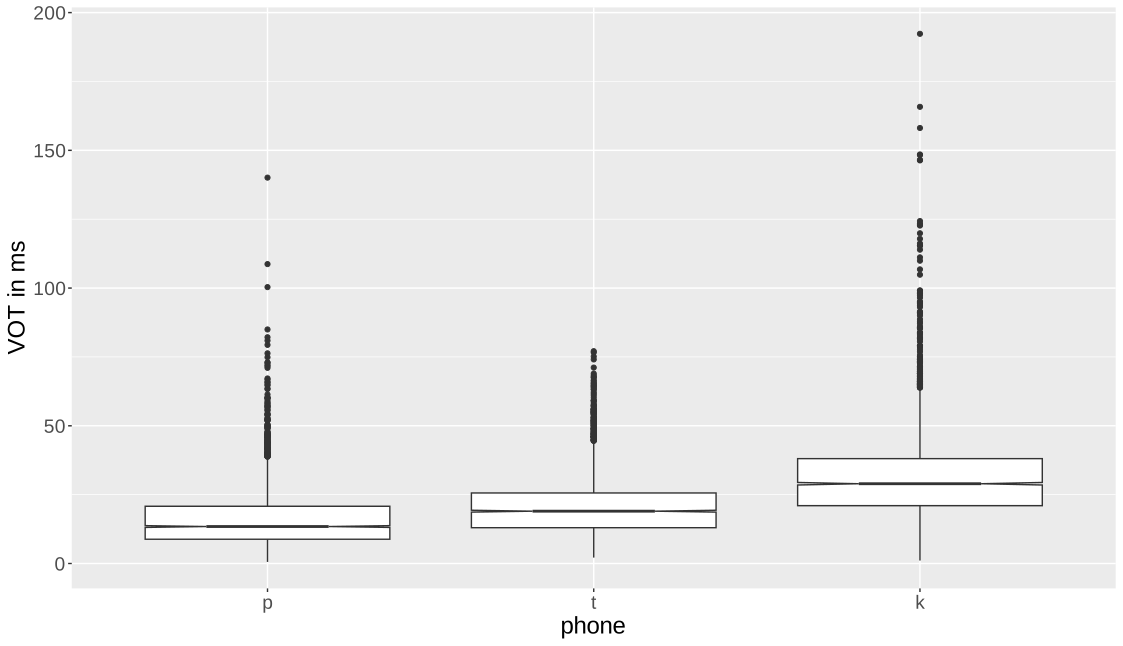
Figure 2 shows VOT by phone. As expected, VOT varies based on point of articulation, with longer values as we move from anterior to posterior position (Lisker & Abramson, 1964). A Tukey post-hoc test found significant differences between all three consonants (p~t p < .001; p~k p <.001; t~k p <.001).
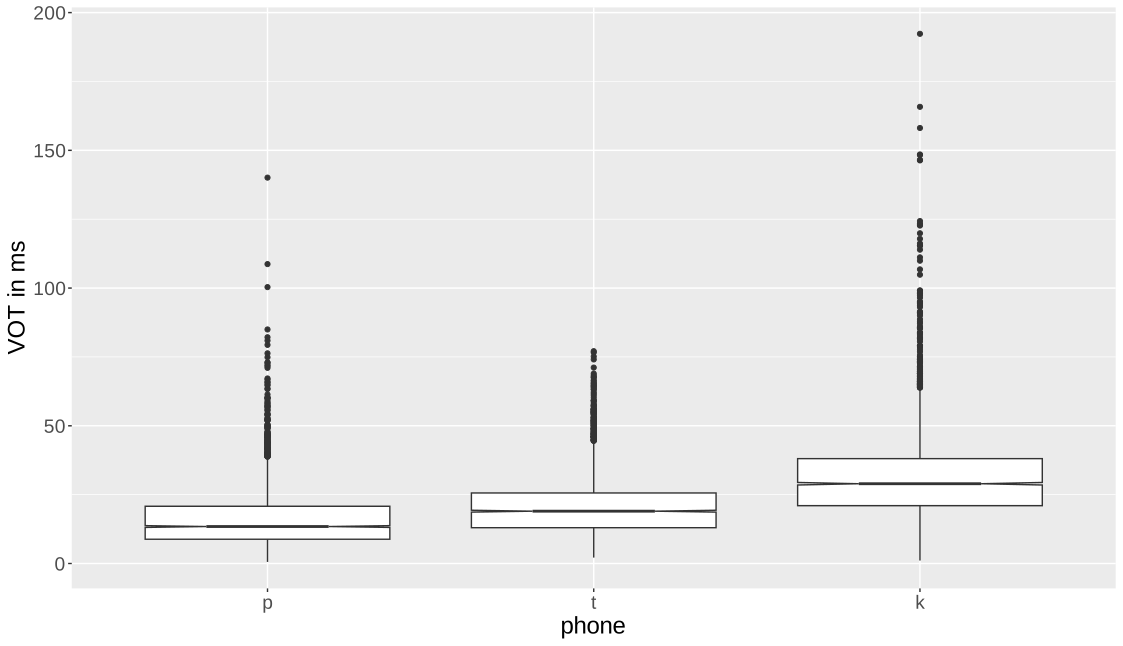
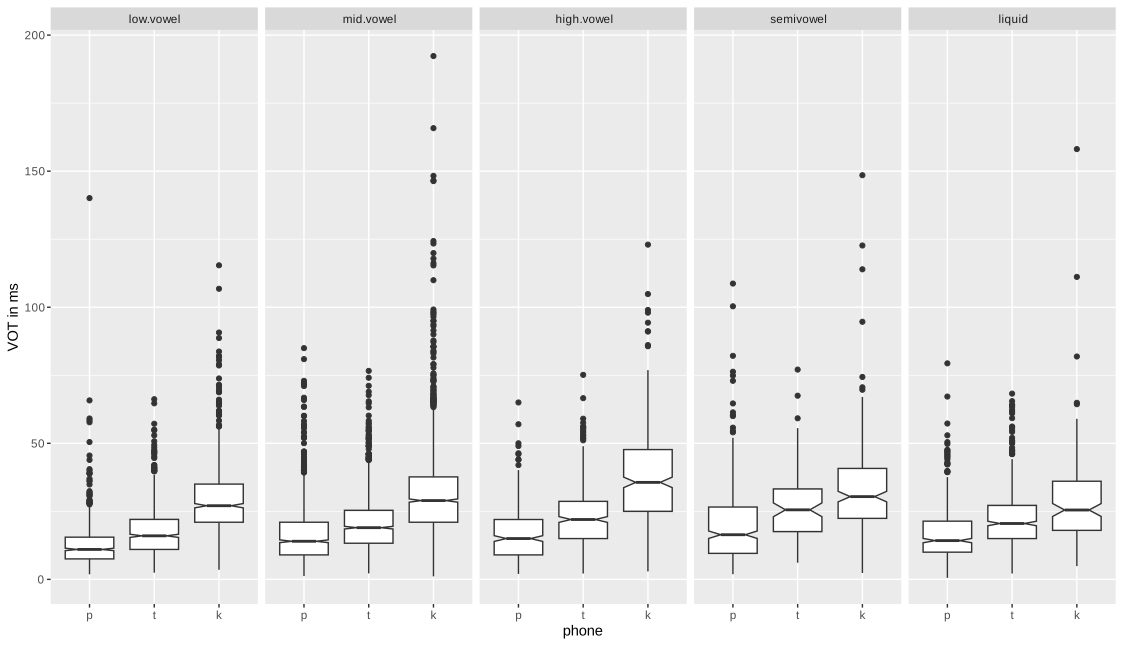
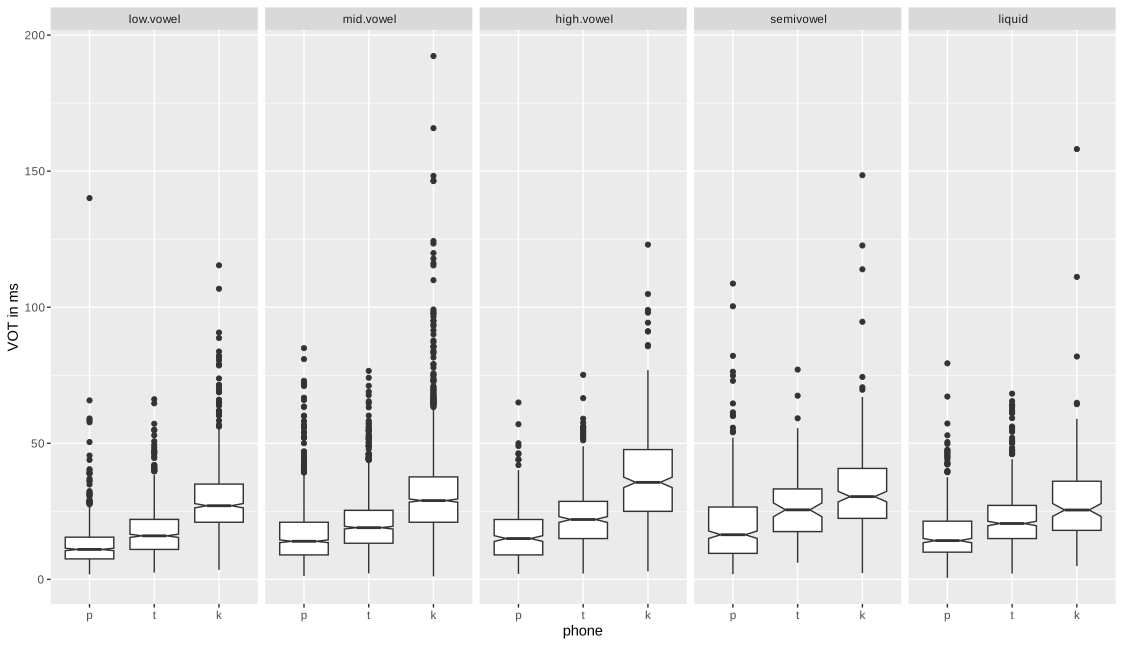
Figure 3 shows the results for VOT by phone and following segment. In the regression, all levels showed significant differences with respect to the reference level, the low vowel /a/, which has the shortest overall VOTs of all following segments. The largest difference is seen with following high vowels, particularly /i/ for phone /k/. A Tukey post-hoc test found significant differences between all following segments (p < .0.01) with the exception of mid vowel ~ liquid (p = 0.82819) and semivowel ~ liquid (p = 0.42960).
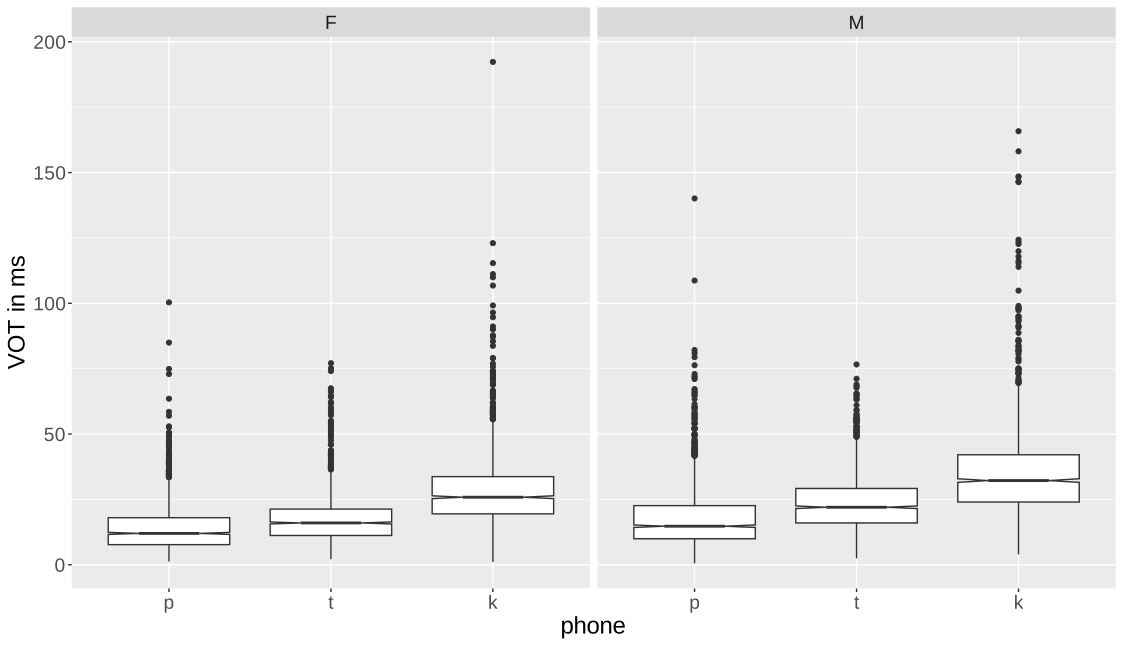
Moving to social factors, the regression found a significant effect of speaker sex, with men producing longer VOTs than women (p < .001). Men also show slightly more variation in their production of /ptk/ than women overall, as seen in Figure 4.
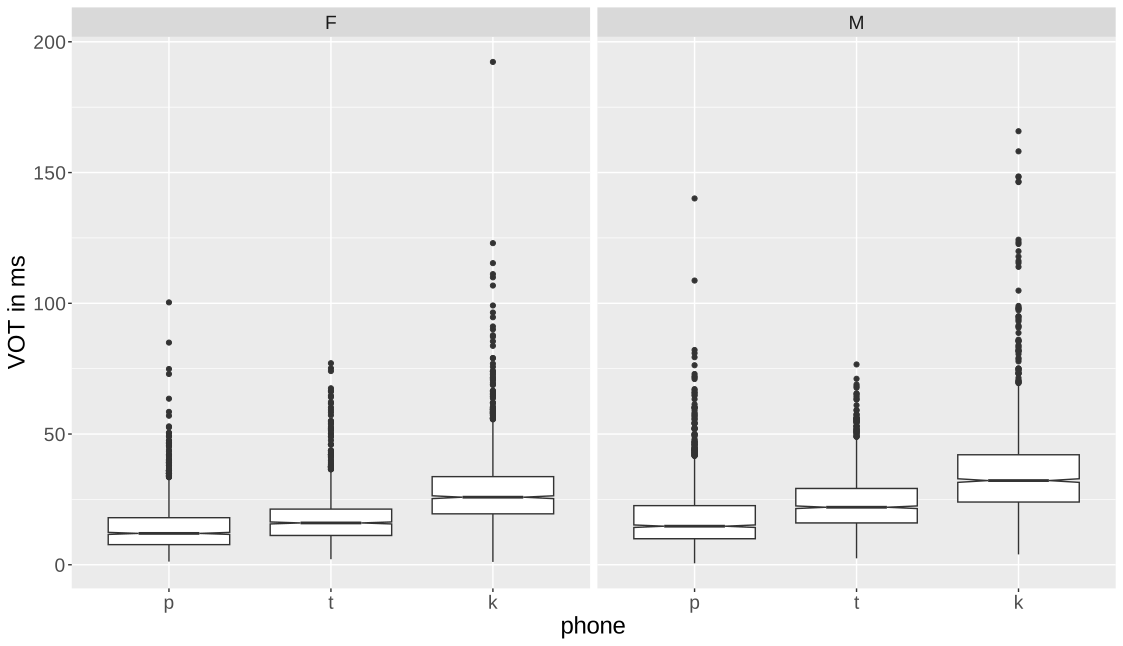
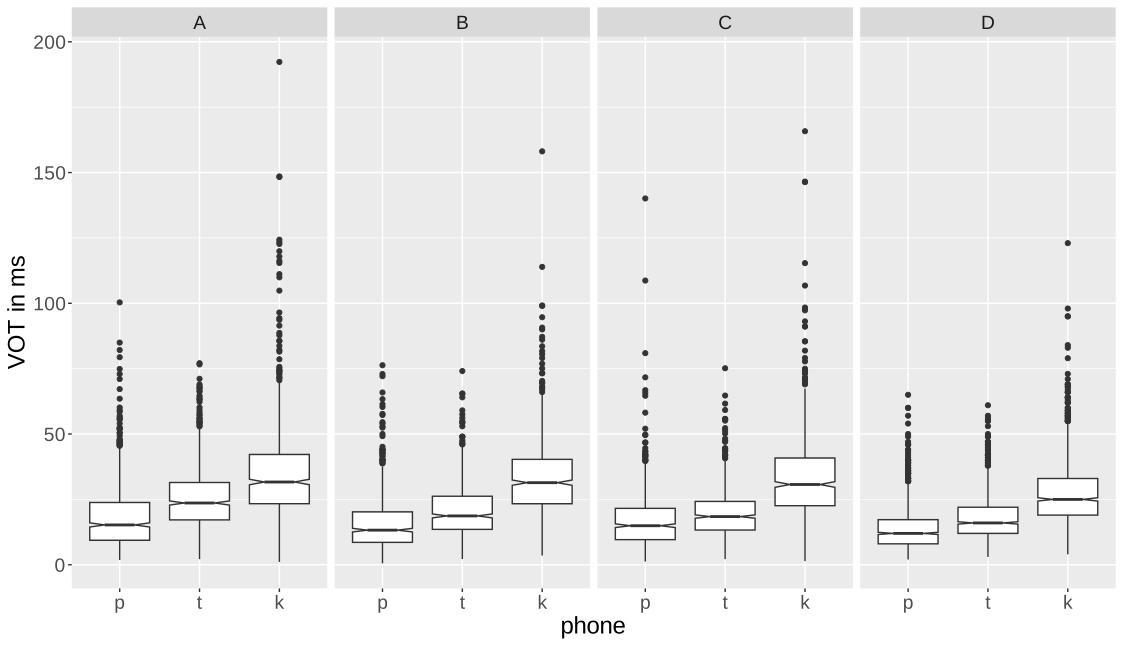
Figure 5 shows VOT by phone and age group. Pair-wise comparisons with a Tukey post-hoc test reveal more detail on changes in VOT across time. Starting with the apparent time comparison between groups A, B and C, there were no significant differences based on age group across all phones (A~B p = .9378; A~C p =.5403; B~C p =1.00). The observed reduction in VOT length and range observed for the real time group D, however, was significant when compared to groups A and B (A~D p <.001; B~D p =.0269). The difference between C~D approached significance (p =0.0664). In other words, the apparent time groups behave in a statistically identical fashion with some minor variations, while group D in real time shows a significant decrease in VOT values with respect to the two older groups, as well as some differences with the apparent time younger speakers in group C.
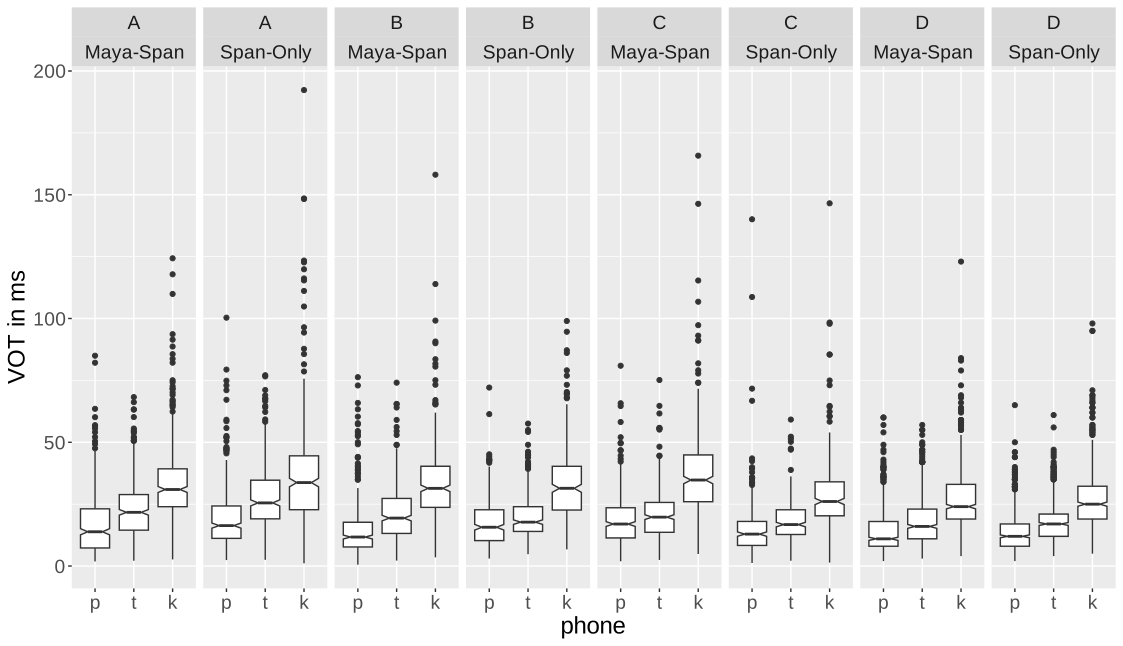
Finally, Figure 6 shows a comparison of age group and language background, revealing several interesting trends that help us to understand why, despite Maya being named as the source of aspirated /ptk/, language background was not a significant predictor in the regression analysis. First, there are few differences between language groups among generations A and B. Particularly among group A, both groups of speakers produced relatively similar and long VOT values. Thus, the oldest speakers tend to pattern with more Maya or intermediate norms, which aligns with findings related to other variables, such as prosodic rhythm (Michnowicz & Hyler, 2020). Group B shows that both language groups have reduced their VOT simultaneously, although not significantly. Group C shows some increased differentiation, before showing further reduction among group D, with Span-only monolinguals slightly ahead of Maya-Spanish bilinguals in shortening their VOTs. So, while age group was a significant predictor, language group was not, given that at no point in either real or apparent time are the differences between language groups large, as both groups are moving away from a more Maya-influenced production in unison. Possible explanations for this pattern will be addressed in the discussion.
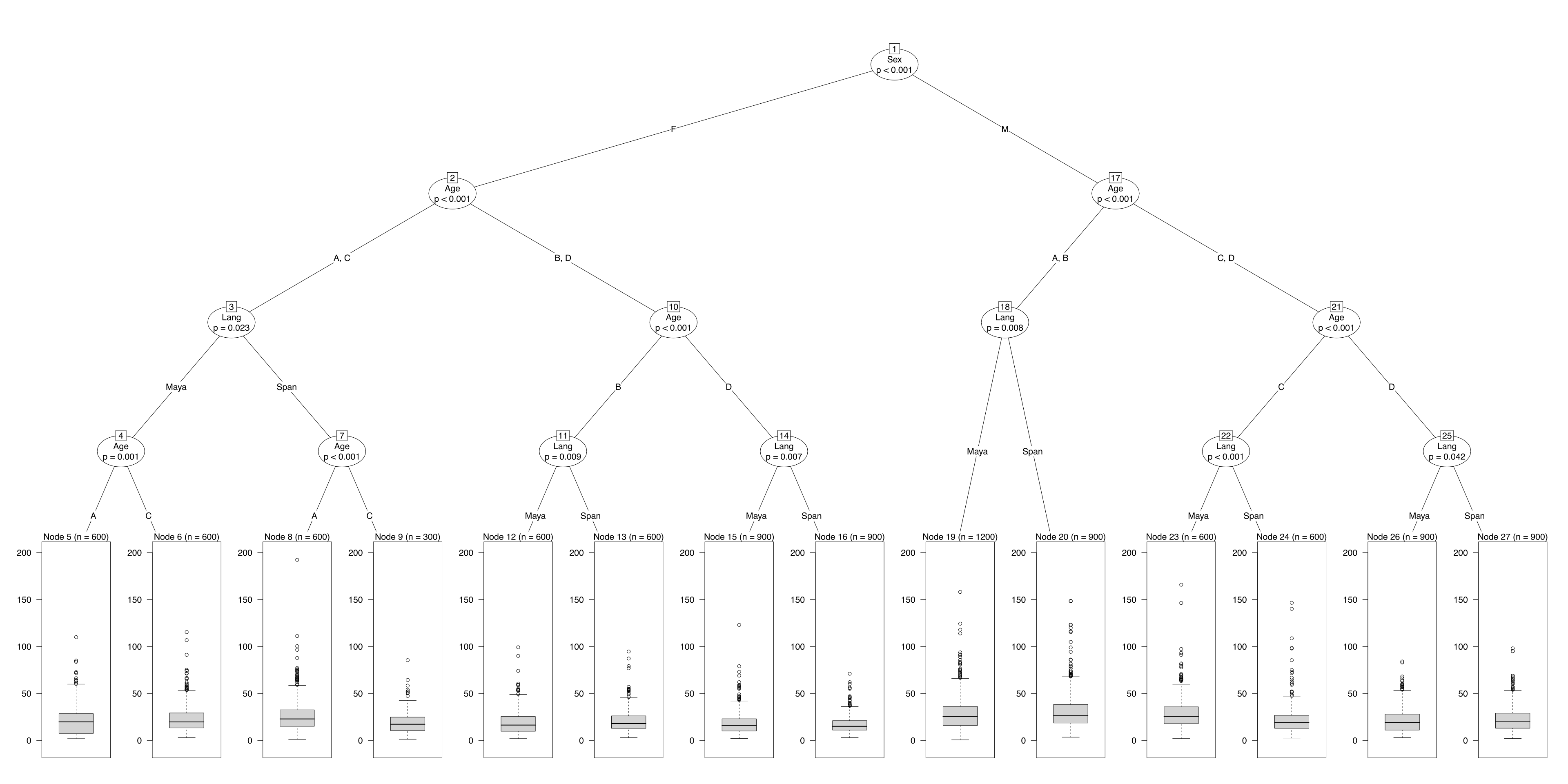
Interactions among social factors are seen in the mixed-effects conditional inference tree in Figure 7[4]. Speaker was included as a random factor.
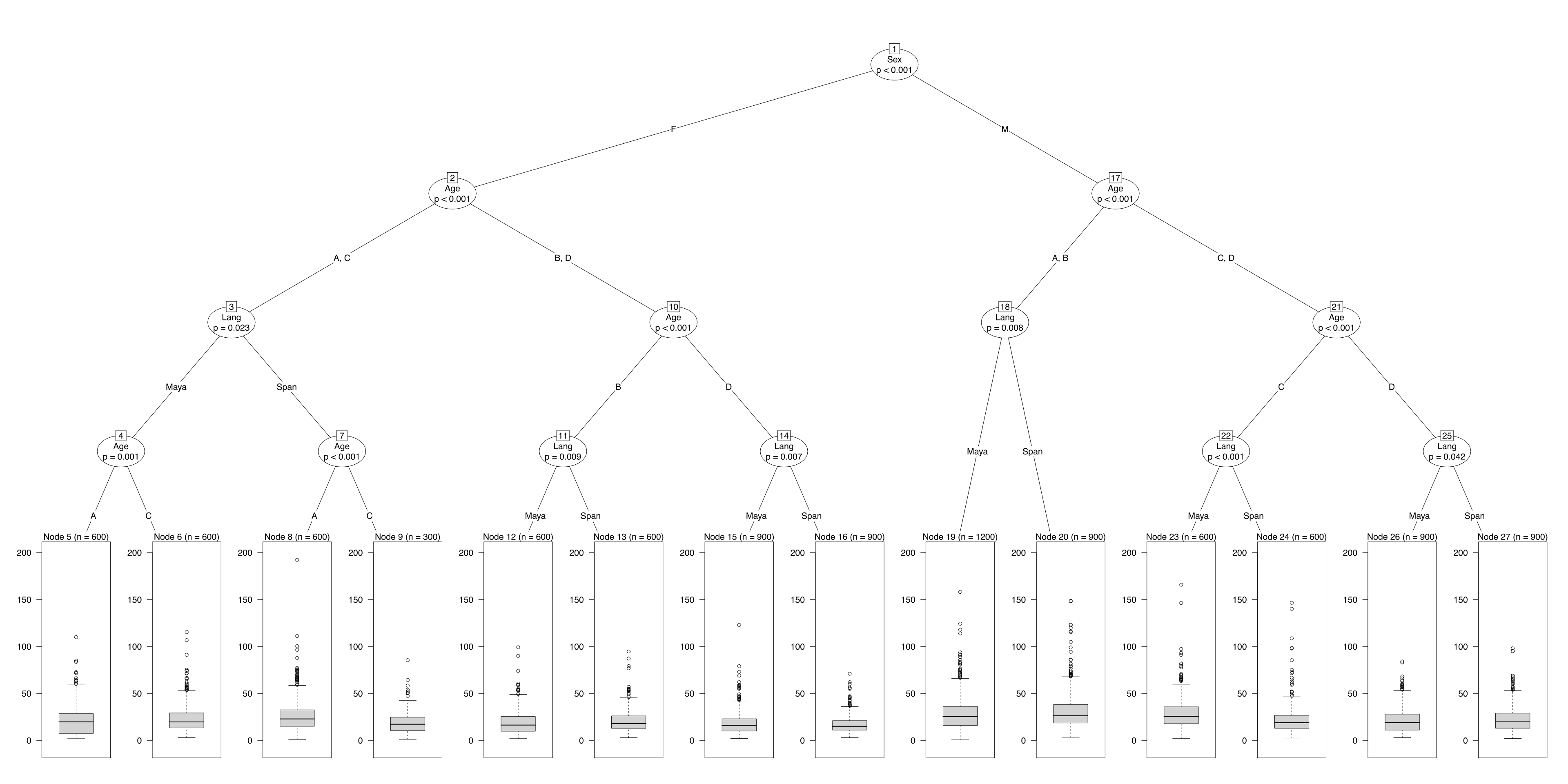
Conditional inference trees find significant binary branching relationships in the data, and present them in a hierarchical model, where factors higher up in the tree have a stronger effect (Tagliamonte & Baayen, 2012). The primary division in the present data is speaker sex, as seen in node 1. For both men and women, age group is the next most important factor, with slightly different distributions for men (A,B vs C,D) and women (A,C vs B,D). For women, groups A and C show further differences based on language background and age groups (nodes 3, 4 and 7), with group C Spanish monolinguals producing the lowest VOT values on this branch of the tree (node 9). Groups B & D show a split based on age (node 10) followed by age group (nodes 11 & 14). Again, the shortest VOTs are found among the youngest (group D) monolinguals (node 16). For men, the age groups split as expected based on the overall results, with groups A and B distinguished from groups C and D (nodes 18 and 21). Among the two oldest age groups, the only remaining significant factor is language background (node 18), while there are further significant differences between groups C and D (node 21), both of which show splits based on language (nodes 22 and 25). Among men, the shortest VOTs are found among group C and D monolinguals (nodes 24 and 27). Overall, despite significant differences between men and women, the youngest speakers of both sexes show the same pattern in producing shorter VOTs than their older counterparts. Additionally, while language background was not a significant main effect, Maya-Spanish bilinguals and Spanish monolinguals do display differences based on sex and age group, with the shortest overall VOTs produced by monolingual women in age group D (node 16).
7. Discussion and conclusions
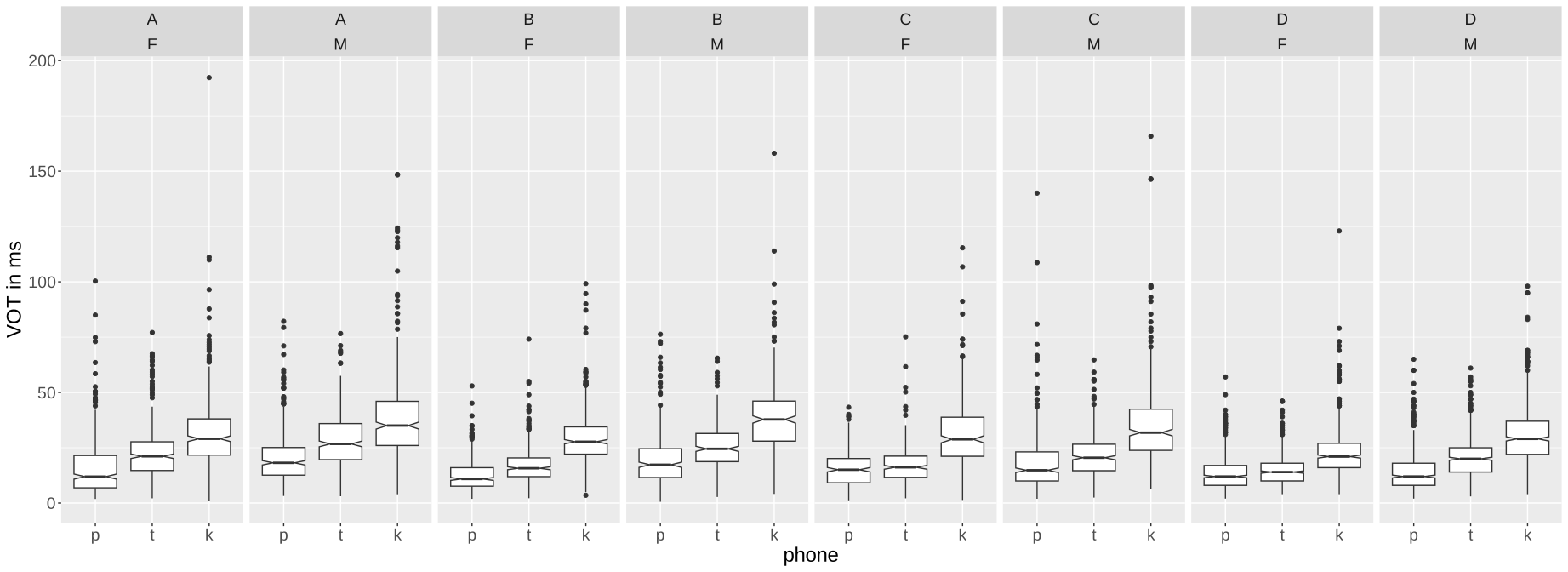
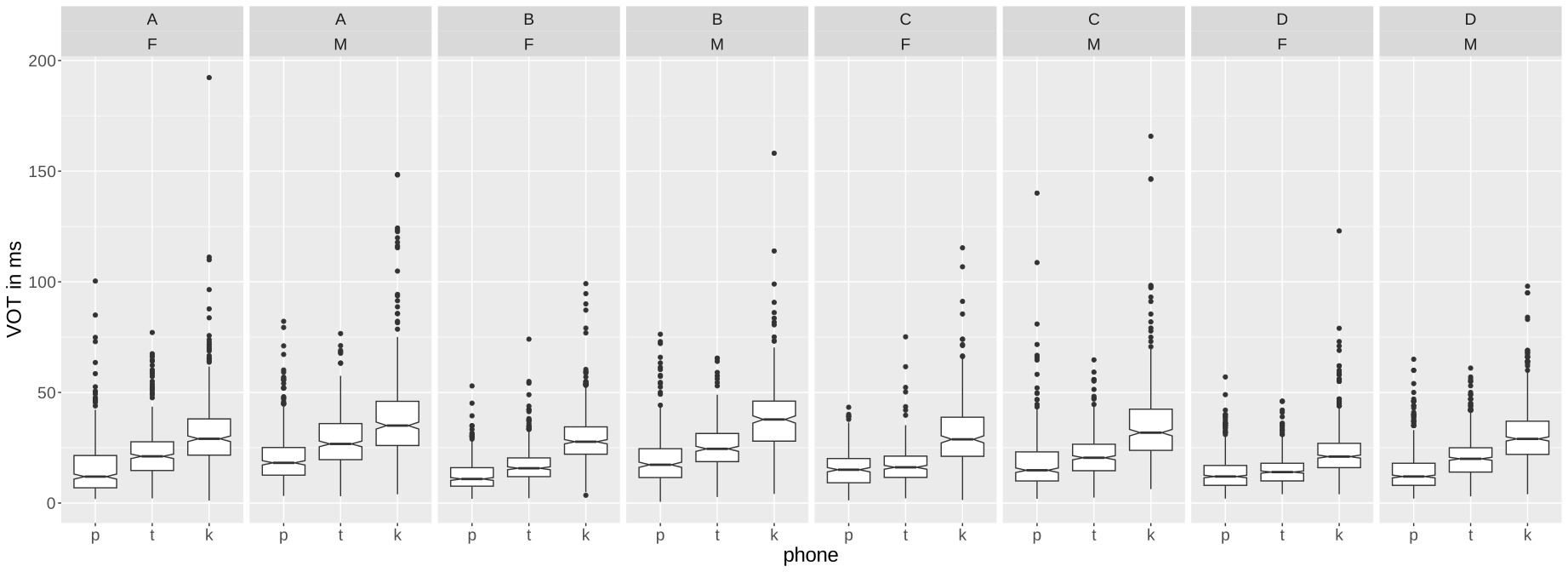
Overall, the results of the present study indicate a move towards less aspirated /ptk/ (shorter VOTs) over time, with a significant reduction in VOT for the youngest, real time group D. While differences across apparent time groups A, B and C did not rise to the level of significance, several patterns in apparent time suggest the beginnings of change towards less aspirated variants. For example, women display shorter VOT values across groups A-C, showing that women are ahead of men in the move to unaspirated [ptk] (Figure 8). Given the role that women play in the diffusion of language change when moving towards a less-marked, more ‘standard’ variant (Labov, 2001), the shorter VOTs among women across apparent time suggest possible future changes. These predicted changes are confirmed by the addition of real time data. Cameron (2011) proposes that in language change, sex differences are smaller at the beginning and end stages, while the largest difference between men and women corresponds to a mid-stage change in progress. Additionally, continued significant differences based on sex suggest that a change has not yet reached completion. In the present apparent time data, women produced shorter VOTs in all age groups; however the largest difference for sex is found in group B, suggesting that this group may represent the middle of the change across time towards shorter VOTs. Likewise, group D continues to show sex-based differences, suggesting that the move towards shorter VOTs is not yet complete, although the mean values across speakers are now in line with those reported for monolingual speakers across the Spanish-speaking world (see Table 1): /p/ 13.9 ms; /t/ 17.8 ms; /k/ 26.5 ms, as speakers of both sexes converge on non-regional norms.
Additional evidence for change in progress among both the apparent time and real time comparison groups is found when examining the range of VOT values in YS (i.e., the difference between the longest and shortest VOT values). Michnowicz & Carpenter (2013) argue that the perception that /ptk/ are highly aspirated in YS is due not to the mean VOT, but rather to the increased range of aspiration, where a few extremely long VOT realizations give the impression of more aspirated /ptk/ overall. In the present data, the VOT ranges for YS are much longer than those reported for other varieties (Table 5)[5]. Comparing VOT ranges across age groups shows that not only mean values, but also the variation in VOT production as indicated by range, drop to the lowest levels among the real-time group D. This reduction in range is observed for both Spanish monolinguals and Maya-Spanish bilinguals.
As discussed, language background was not a significant predictor in the present analysis, given that Spanish monolinguals and Maya-Spanish bilinguals are both shifting away from more aspirated, Maya-influenced VOT values towards shorter, more pan-Hispanic VOT values across age groups, a reduction seen in both overall VOT values (Figure 5) as well as VOT range (Table 5). At first glance, this is a surprising result, given that studies have consistently attributed aspirated [phthkh] to contact with Maya. This result, however, is consistent with research on other variables in YS, and supports one of the most striking findings of numerous studies on YS, namely that for most phonological variables, age group is a much stronger predictor than language background, even when the traditional variants are convincingly argued to come from Maya contact (Michnowicz, 2015; Michnowicz et al., 2025). For example, Michnowicz & Hyler (2020) found that the oldest speakers, regardless of language background, showed intermediate rhythm values between Maya and Mexico City Spanish. Michnowicz & Hyler (2020) argue that at an earlier stage of development, the Spanish of monolinguals in the urban areas of Yucatan would have contrasted with the (Maya-dominant) speech of the indigenous population in outlying areas, but that once these two groups came into close contact in cities like Merida during the early 20th century, the particular contact situation in Yucatan allowed many bilingual features to permeate even the speech of Spanish monolinguals. Thomason and Kaufman (1988) show how phonological features can diffuse from one language to another when there is prolonged bilingualism in the community, and that monolinguals can also display features shaped by the contact language when they live in environments where a contact variety or bilingual speech norm is common (p. 50; see also Flege & Bohn, 2021). Exemplar Theory (Bybee, 2003) also shows how the dominance of Maya-accented input for Yucatecos would allow aspirated /ptk/ to arise among Spanish monolinguals and bilinguals alike, giving rise to the lack of significant differences based on language group. The present data have a time depth of more than 80 years (1916-1998), and aspirated /ptk/ had already diffused to the monolingual population by the time the oldest speakers in the data had solidified their dialects. This relatively stable situation has changed over the past few decades, as younger speakers are increasingly exposed to non-contact speech models, and speakers of both language backgrounds are shifting together toward more pan-Hispanic norms of unaspirated stops.
This pattern of change across real time within the community is consistent with the findings for other variables. For example, Michnowicz (2021) found a sharp drop in absolute final -m among the real time group, clarifying ambiguous results in apparent time. A real time analysis of occlusive realizations of intervocalic /bdg/ demonstrated that the primary move towards approximant variants had already occurred in apparent time, while the real time generation further consolidated those changes (Michnowicz, 2023). Likewise for prosodic rhythm, Michnowicz & Hyler (2020) found that the real time group rapidly focused around Mexico City values for rhythm correlates. The results for /ptk/ show that, as for final -m, /bdg/ and rhythm, young YS speakers, at least in and around the capital city of Merida, are articulating /ptk/ differently than their parents and grandparents[6]. The finding that all YS variables for which real time data have been added show the same rapid movement away from traditional YS variants contributes to our understanding of language contact and standardization of regional varieties.
These insights would not have been possible without the addition of real time data. Future research on YS should focus on adding additional real time data to studies on variables across all domains of language, not only in Merida, but in smaller cities and pueblos across the peninsula, to accurately document both how indigenous-influenced varieties of Spanish are undergoing change and standardization as well as how young speakers may utilize regional forms to reflect and maintain their sociolinguistic identities.
Referred to as Maya by its speakers.
Average VOTs for Yucatec Maya are as follows: /p/ 25 ms; /t/ 18 ms; /k/ 64 ms (Burnett-Deas, 2009).
There are several reasons to argue that ejectives are more marked than aspirates cross-linguistically, both in regard to typological frequency and phonological complexity. Ejectives are much less common cross-linguistically, occurring in only 16% of languages (vs. 35-40% for aspirates, including both phonemic and allophonic aspirated /ptk/), and are restricted geographically (Moran & McCloy, 2019). Likewise, as glottalic egressive consonants, ejectives require more effort to produce than plain or aspirated stops (Ladefoged & Maddieson, 1996).
The code used to produce this tree in glmertree is: tree1=lmertree(VOT~1| speaker | Sex+Age+Language, data=yucatanVOT)
An anonymous reviewer suggests that the use of extremely long VOT may be performative. That is certainly a possibility, as there is some evidence that other features of YS, such as final -m and prosodic rhythm (Michnowicz, 2021; Michnowicz & Hyler, 2020) can be used performatively. At the same time, it is not clear to what extent aspirated /ptk/ is above the level of consciousness for speakers of YS, and future perception studies should be designed to address this question.
The speakers analyzed in the listed studies were all recorded in the capital and its nearby areas, and due to the limited size of these samples, they should not be considered representative of all Yucatan Spanish speakers across the peninsula. Research has found regional variation within Yucatan—for instance, distinctions between Merida and cities like Valladolid or smaller towns (Rooney, 2024; Uth, 2021). While studies from other areas of the Yucatan suggest that these regions are slower to diverge from traditional linguistic norms compared to Mérida, they appear to be gradually following a similar move towards non-regional norms.